3D LineArt paintings
- Place
- Amsterdam
- Year
- 2022–2023
- Materials
- Acrylic on canvas
- Design
- Milan Sipek
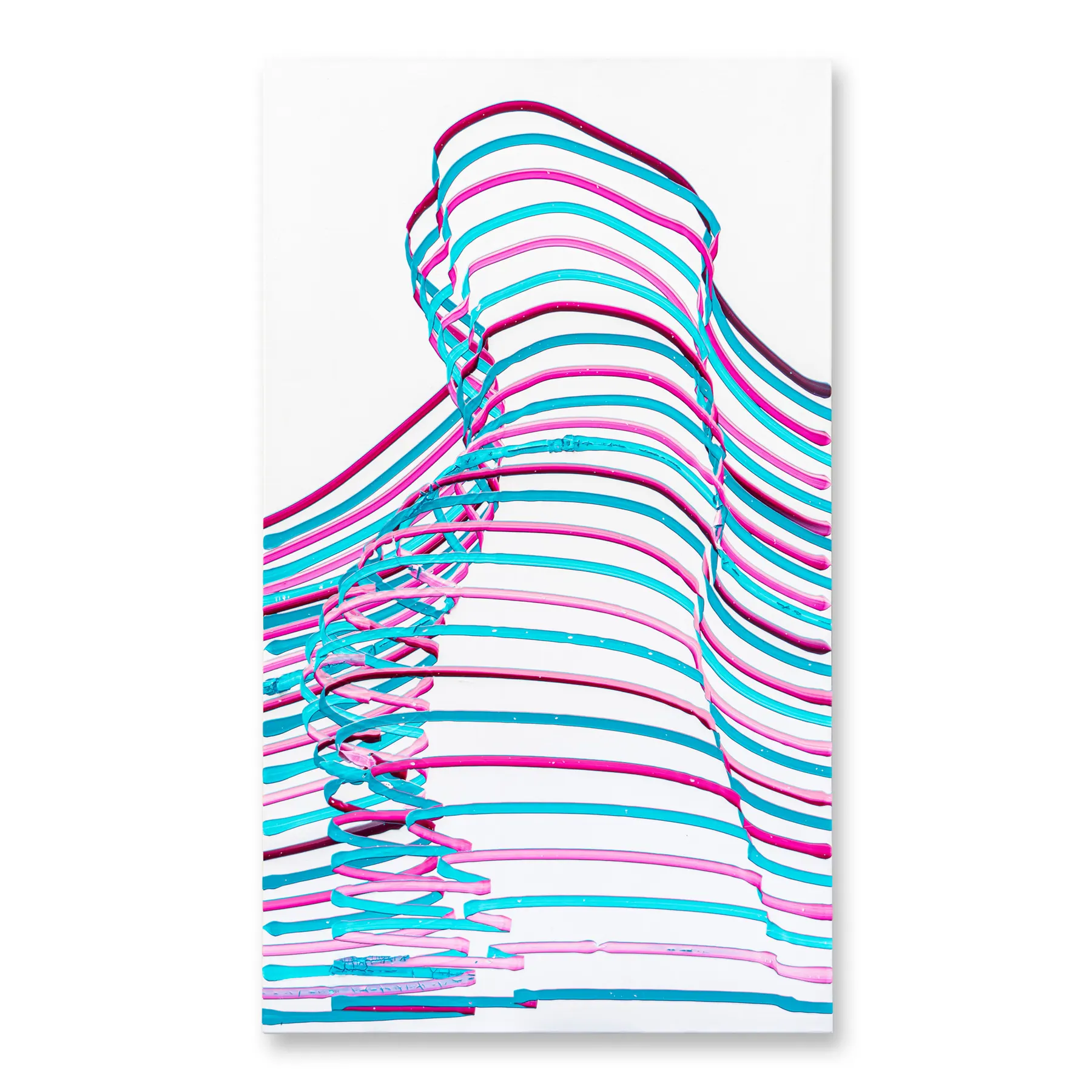
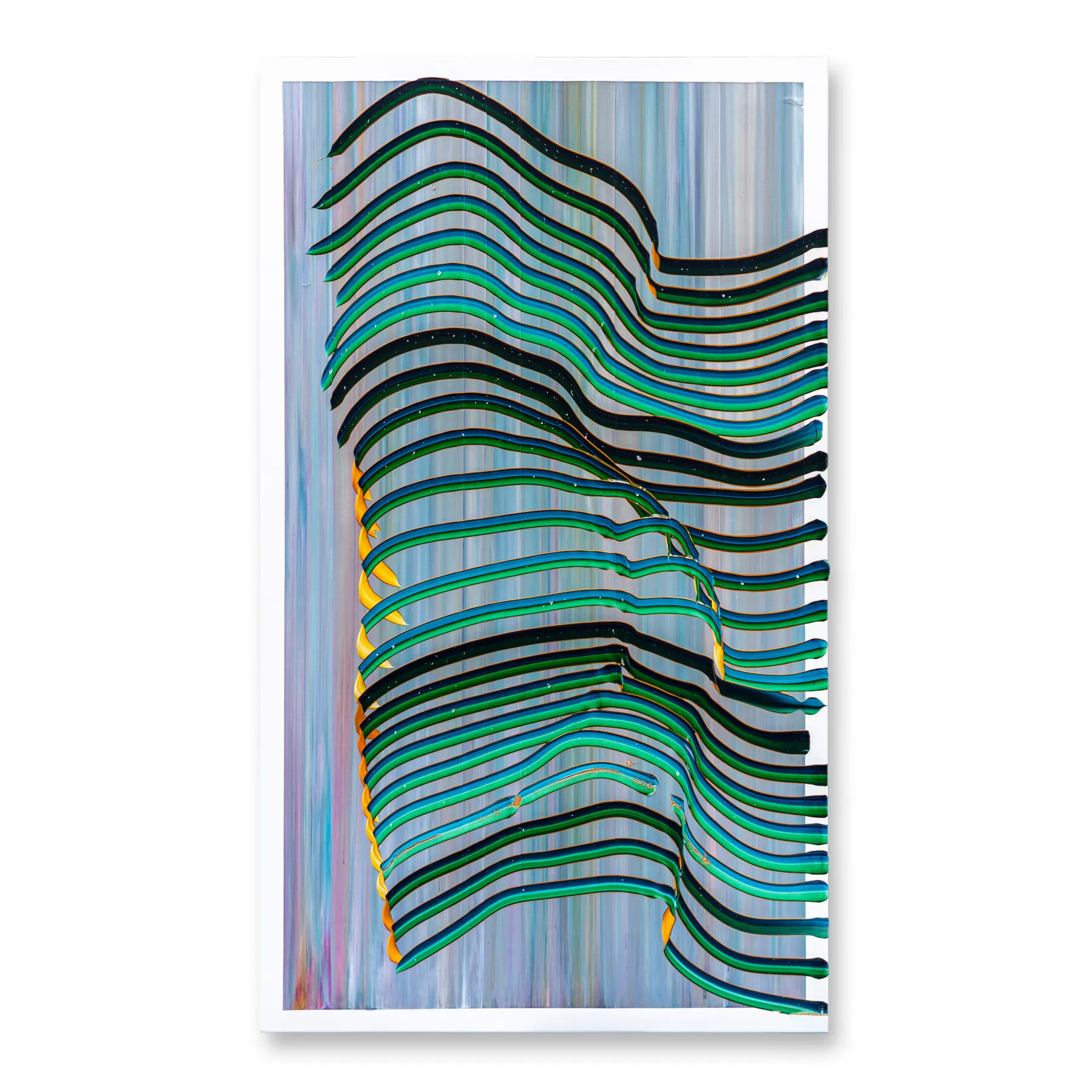
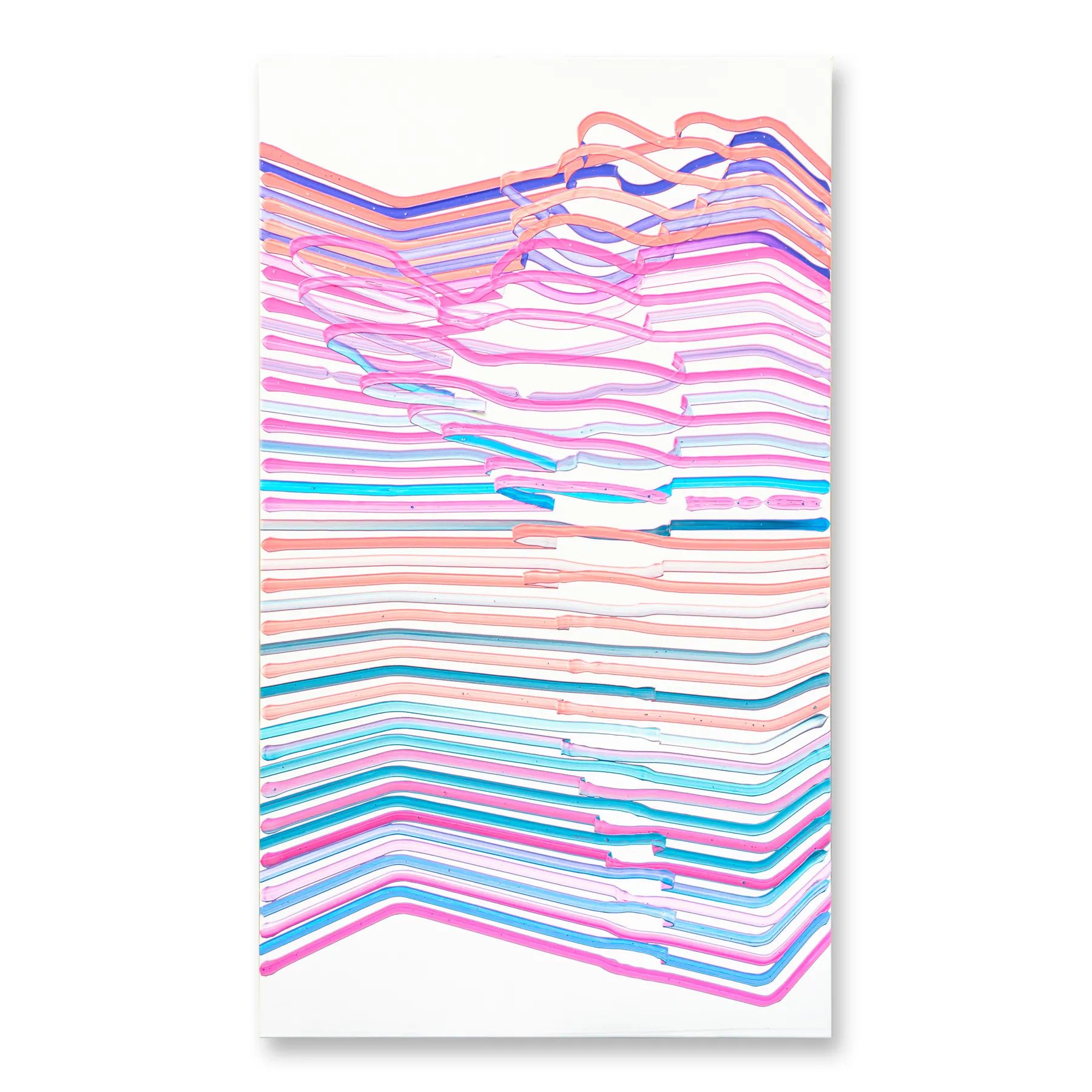
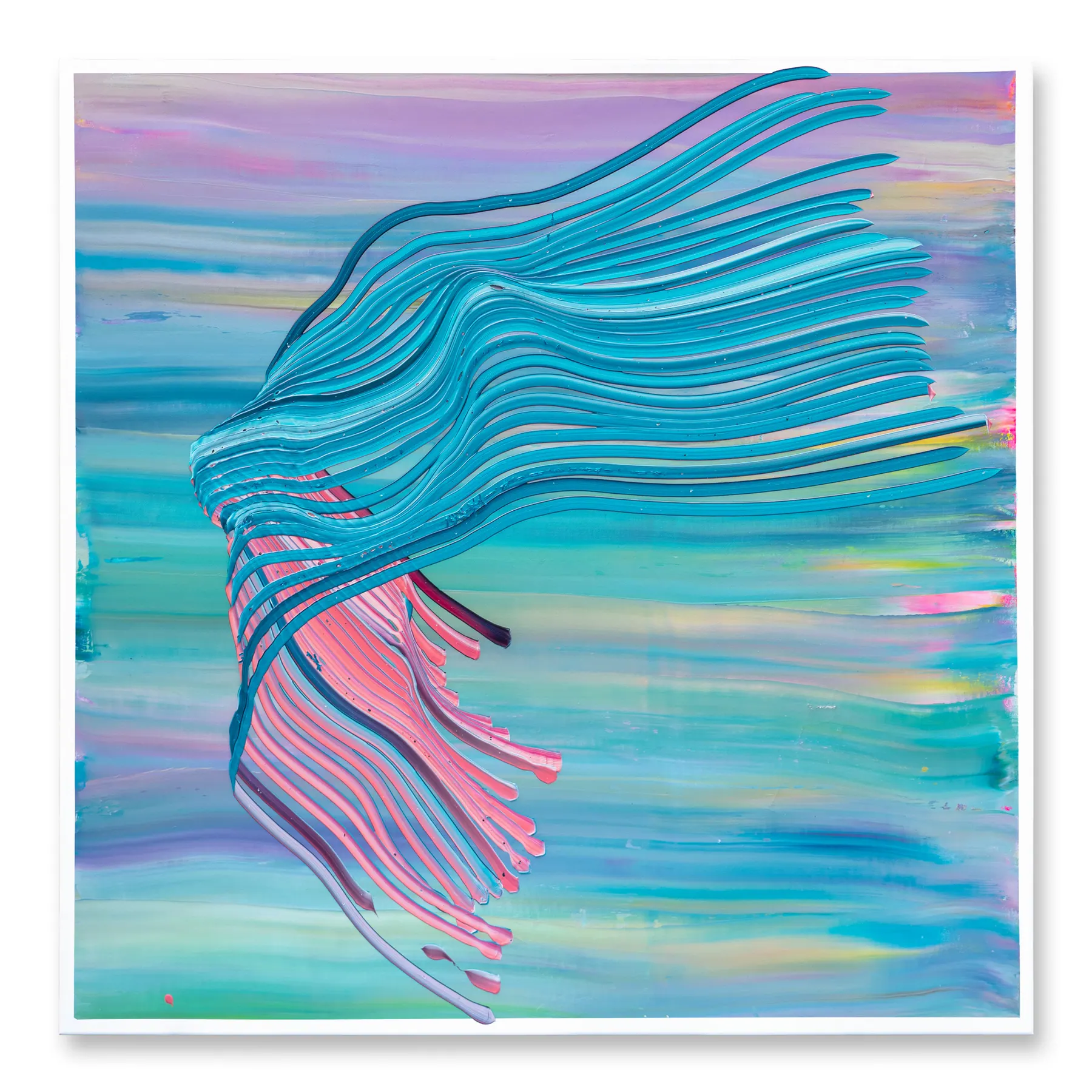
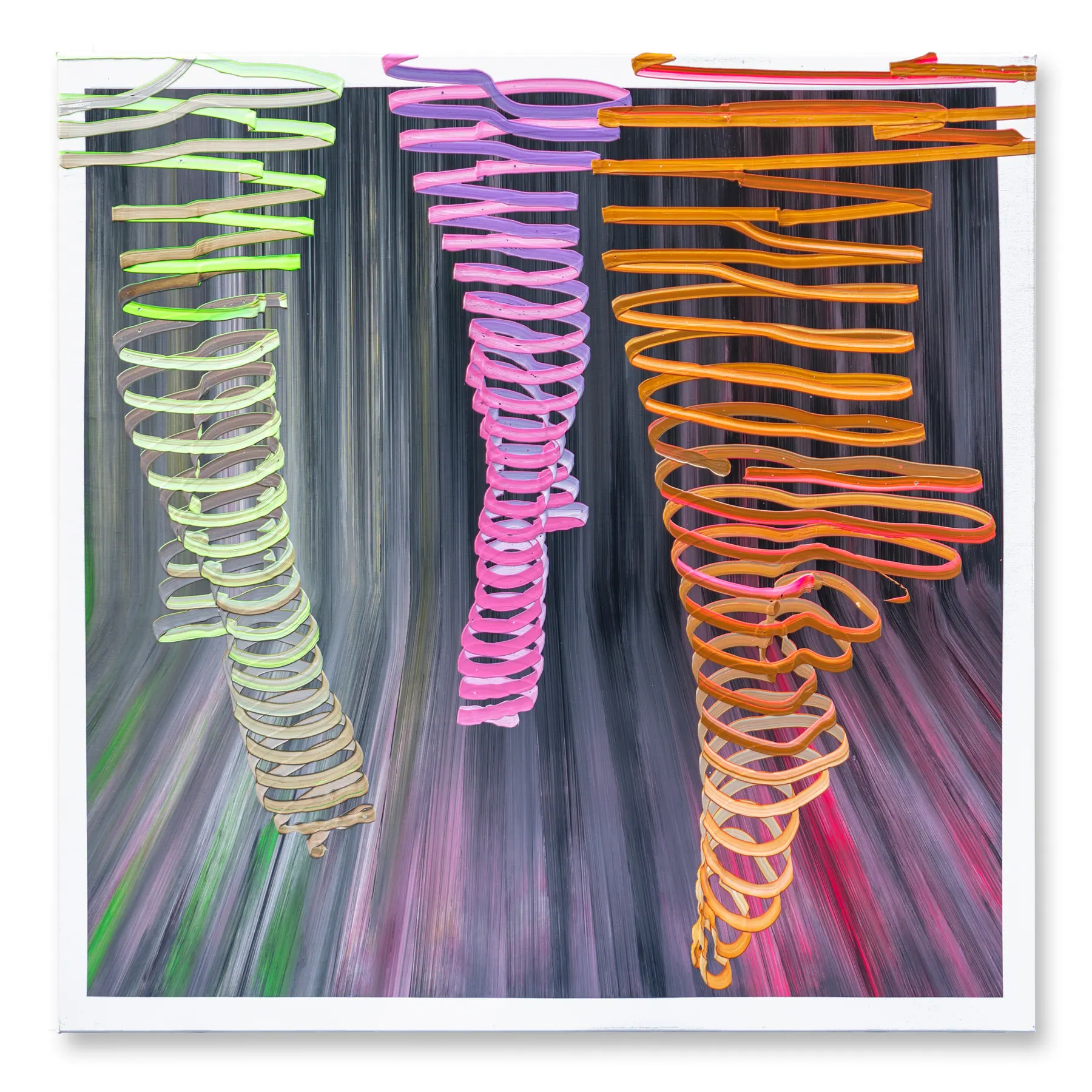
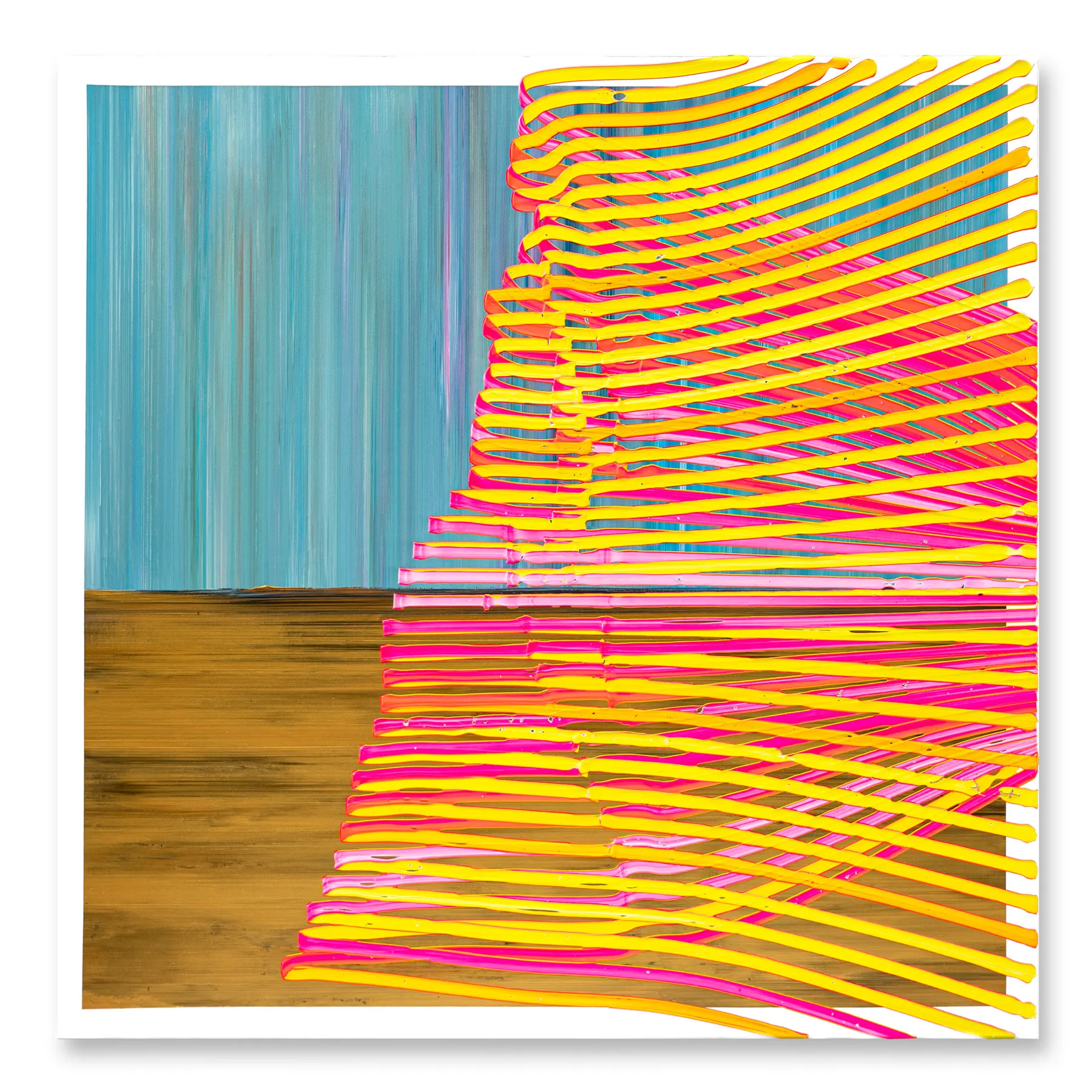
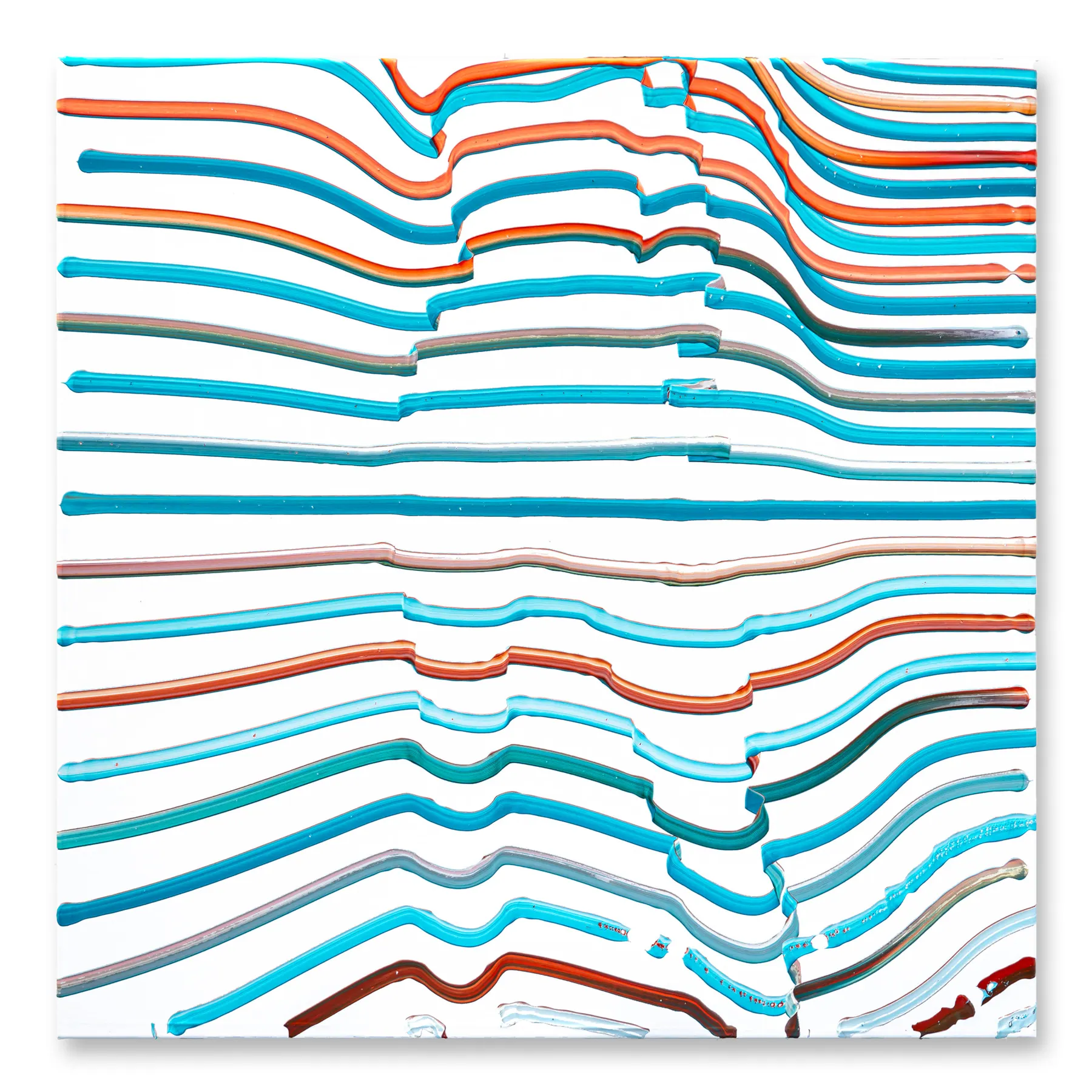
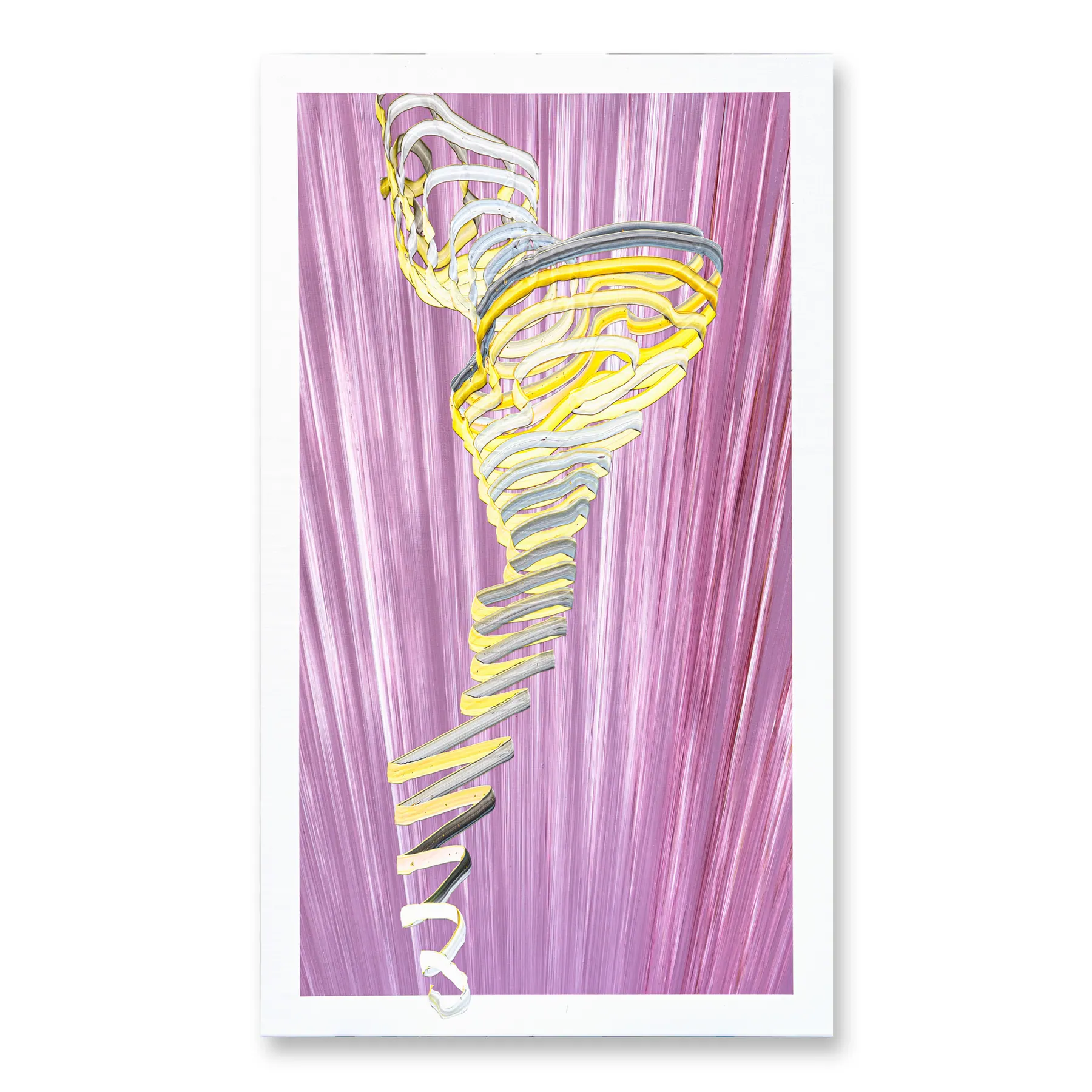
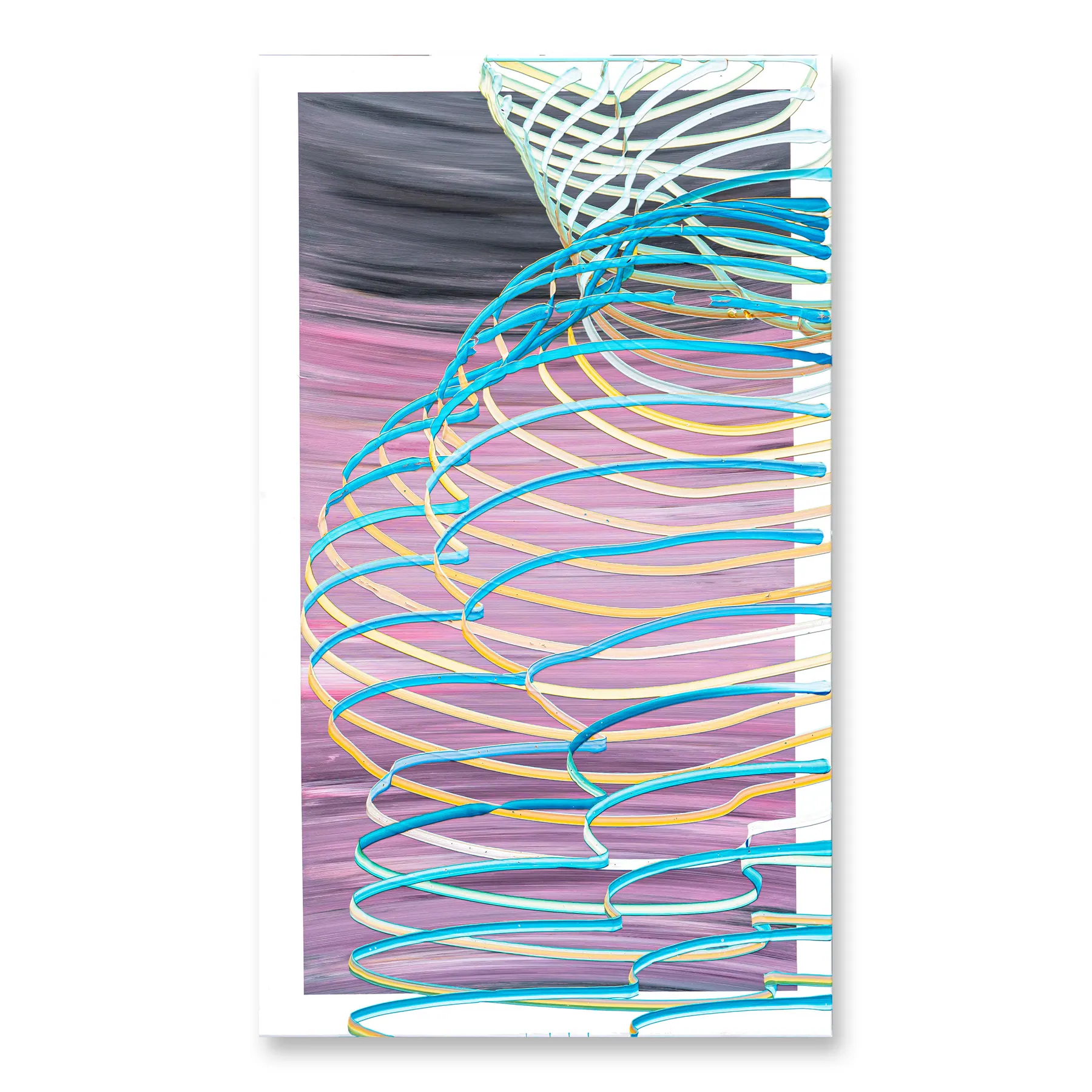
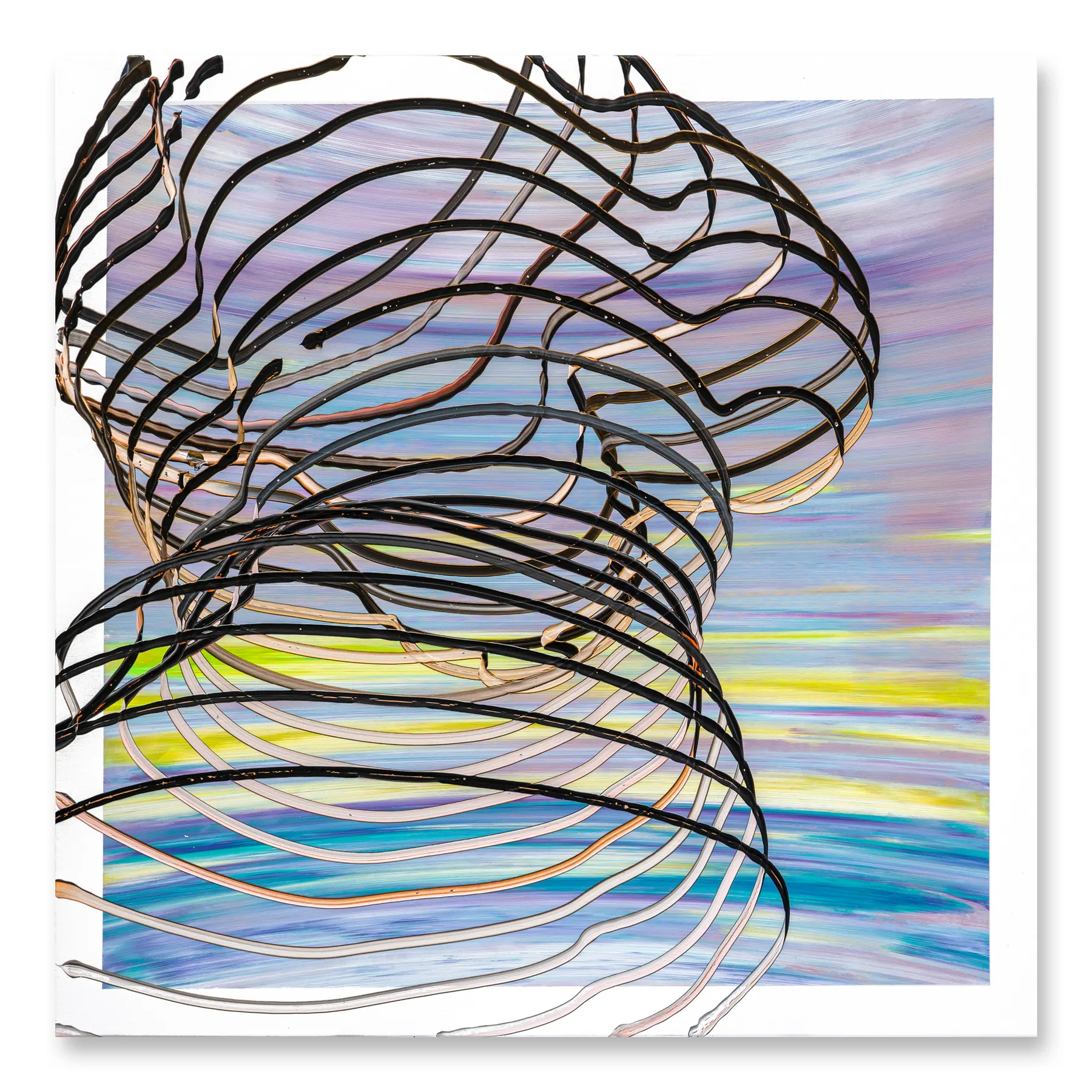
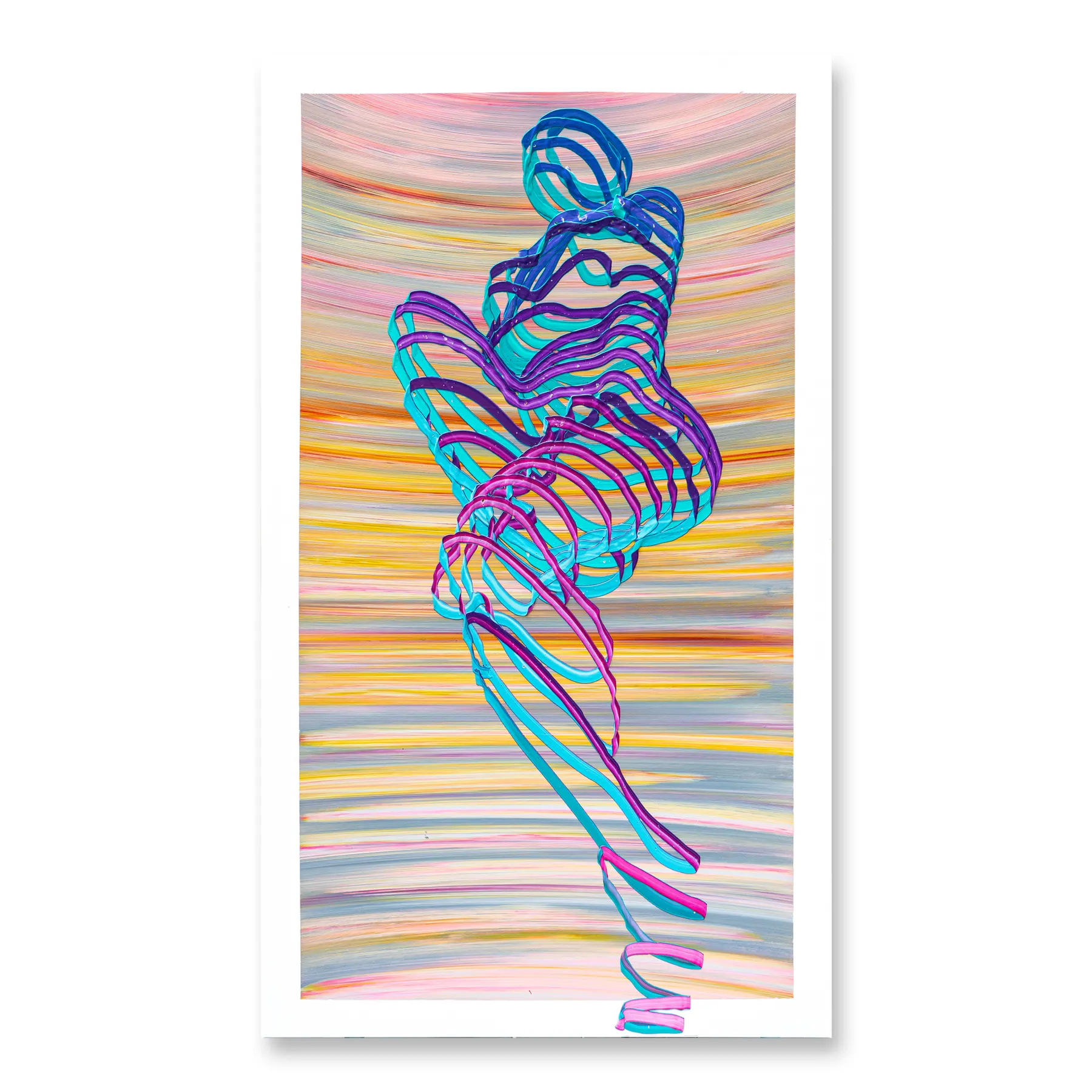
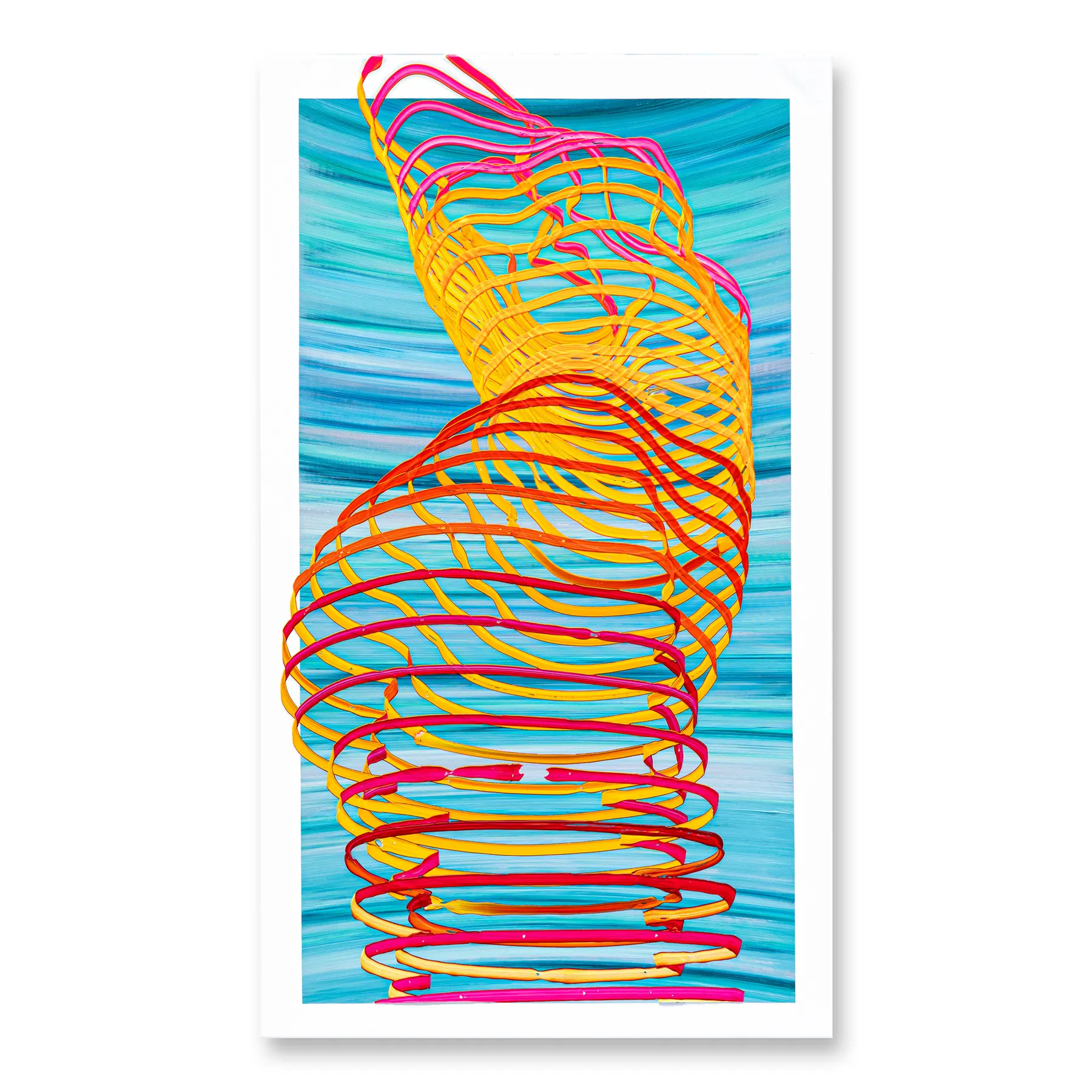
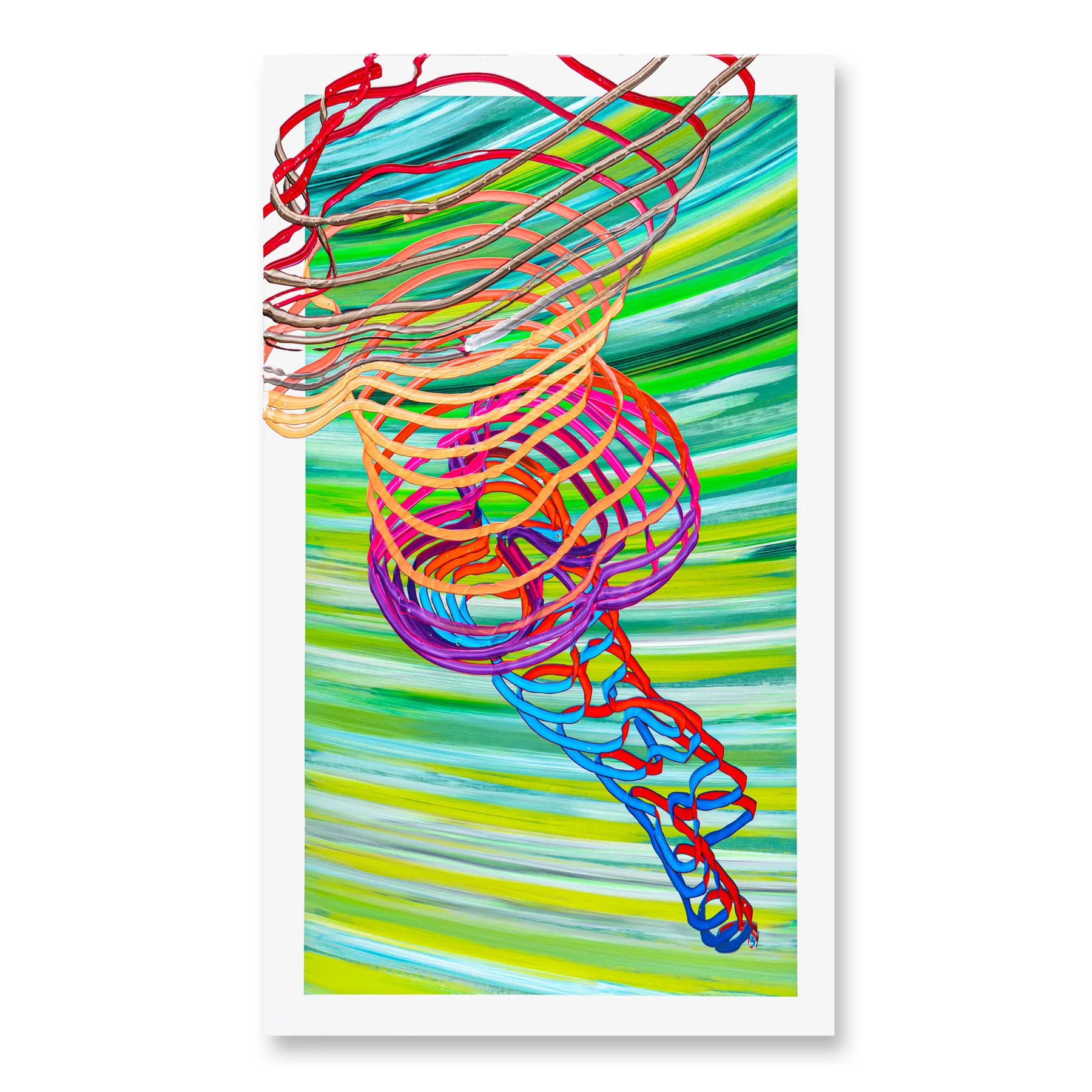
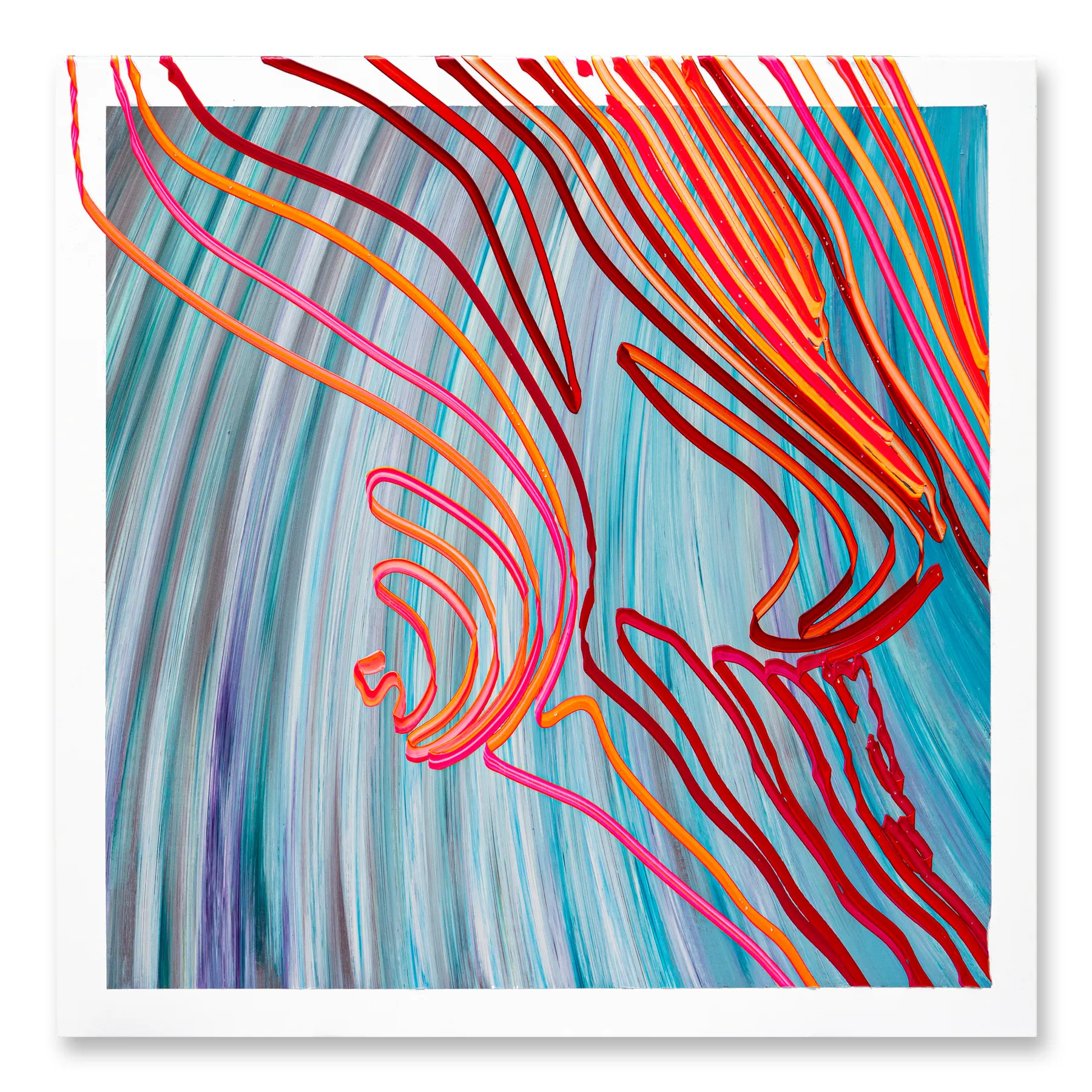
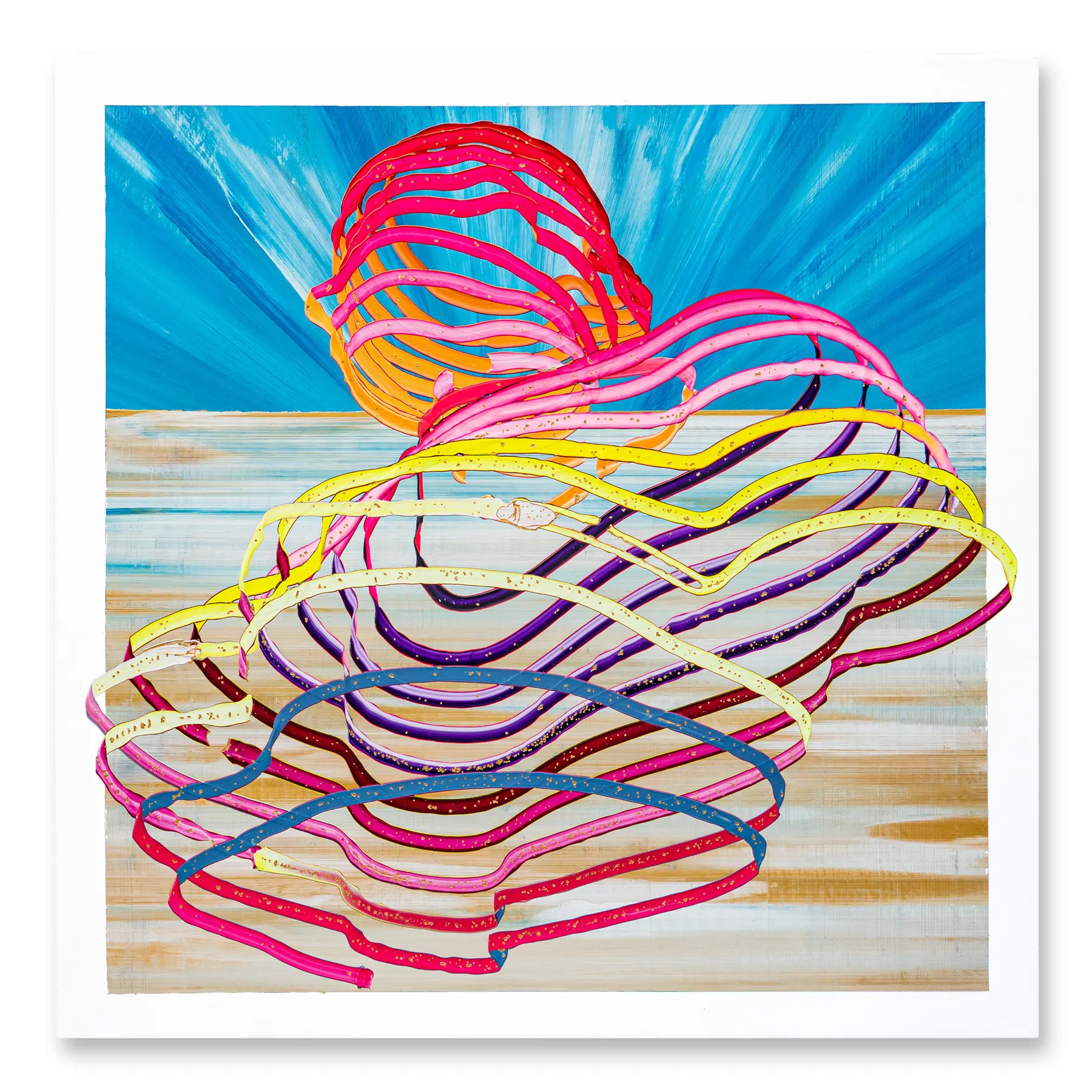
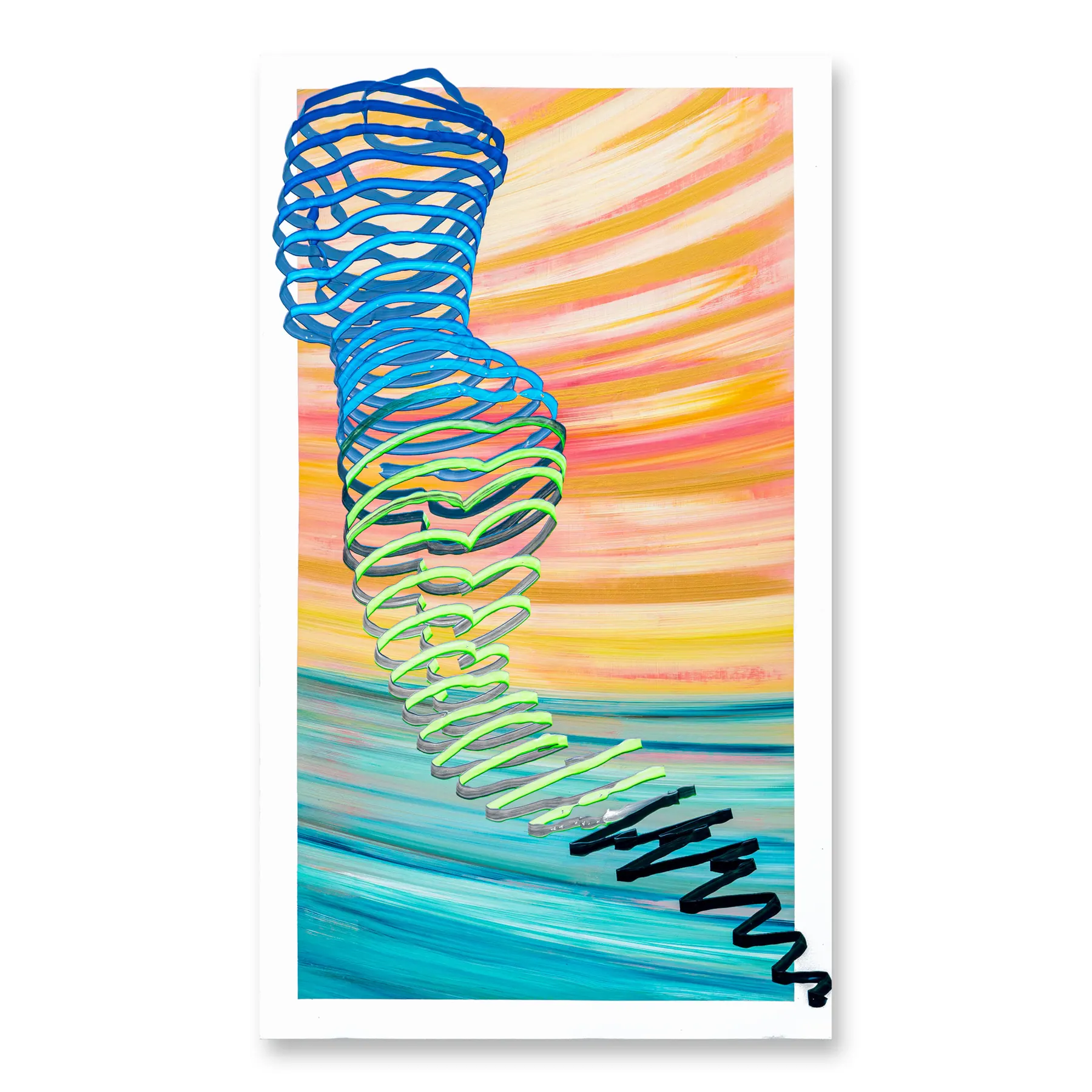
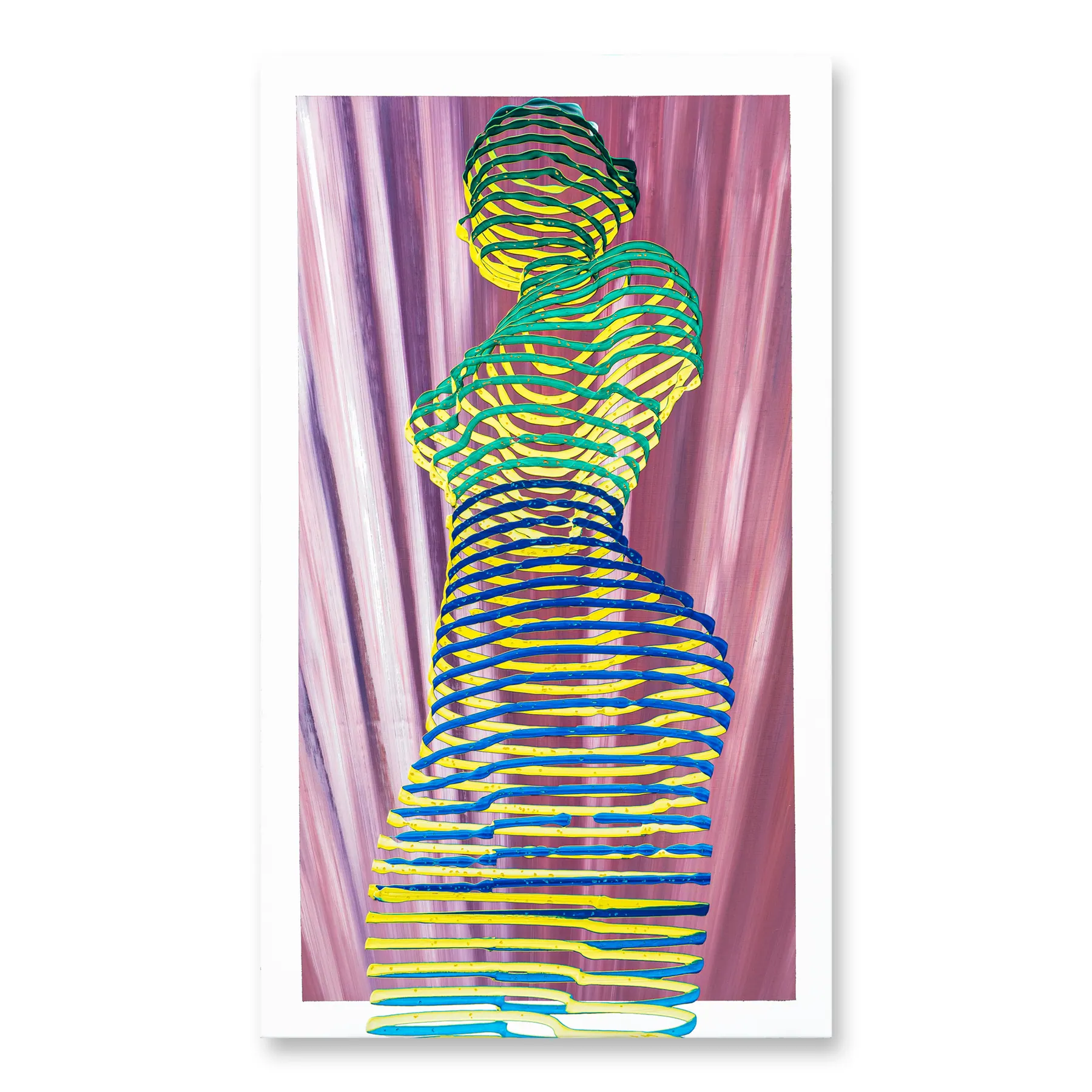
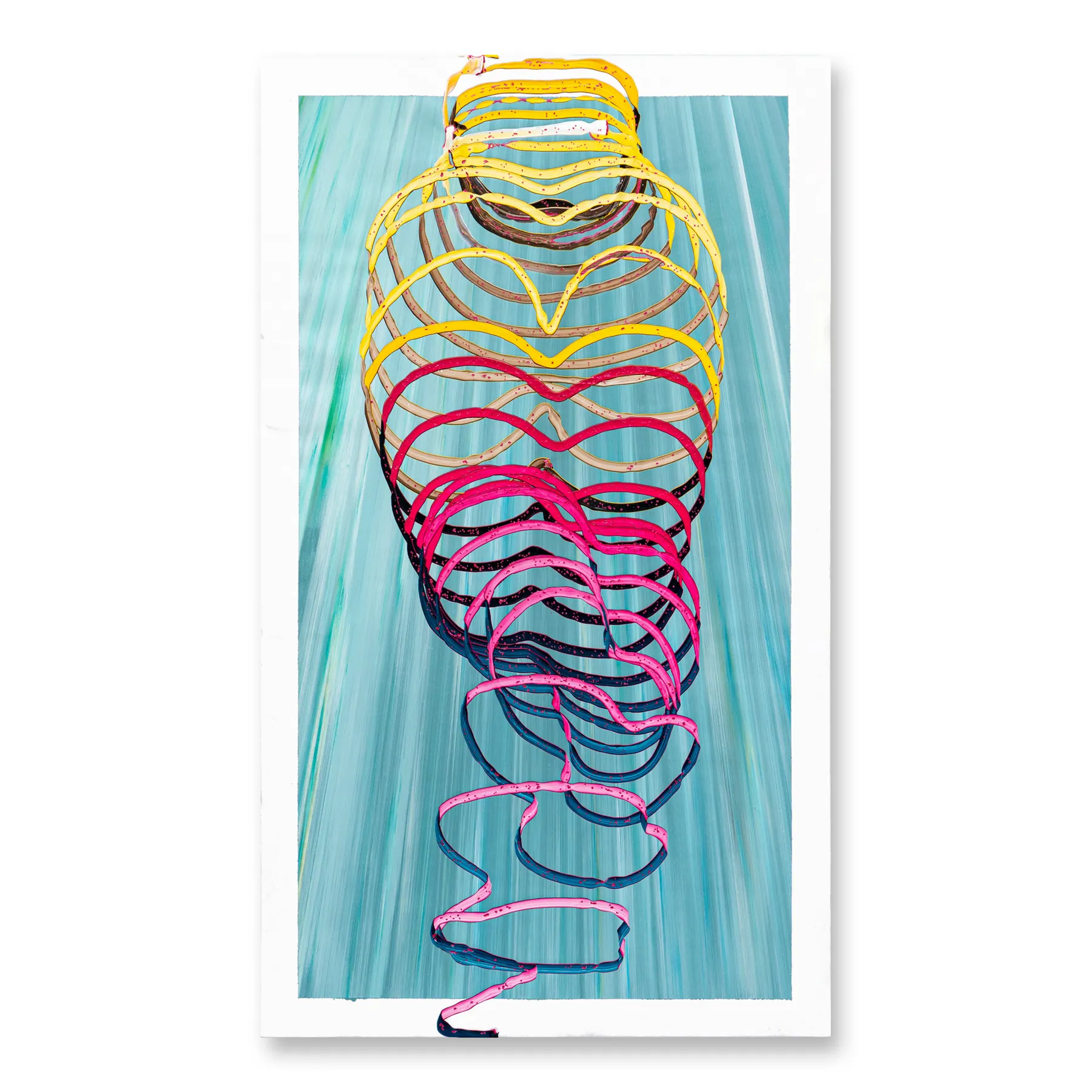
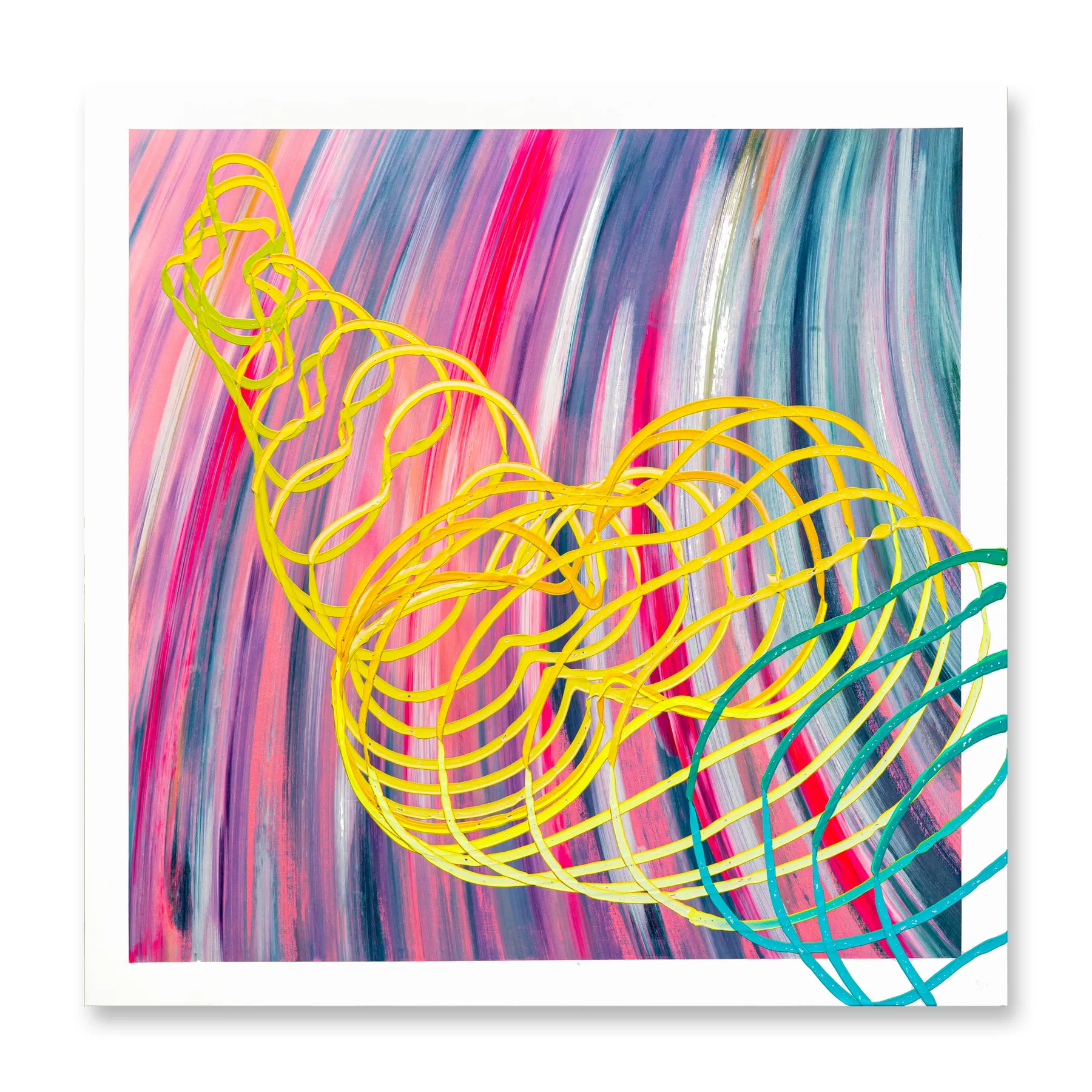
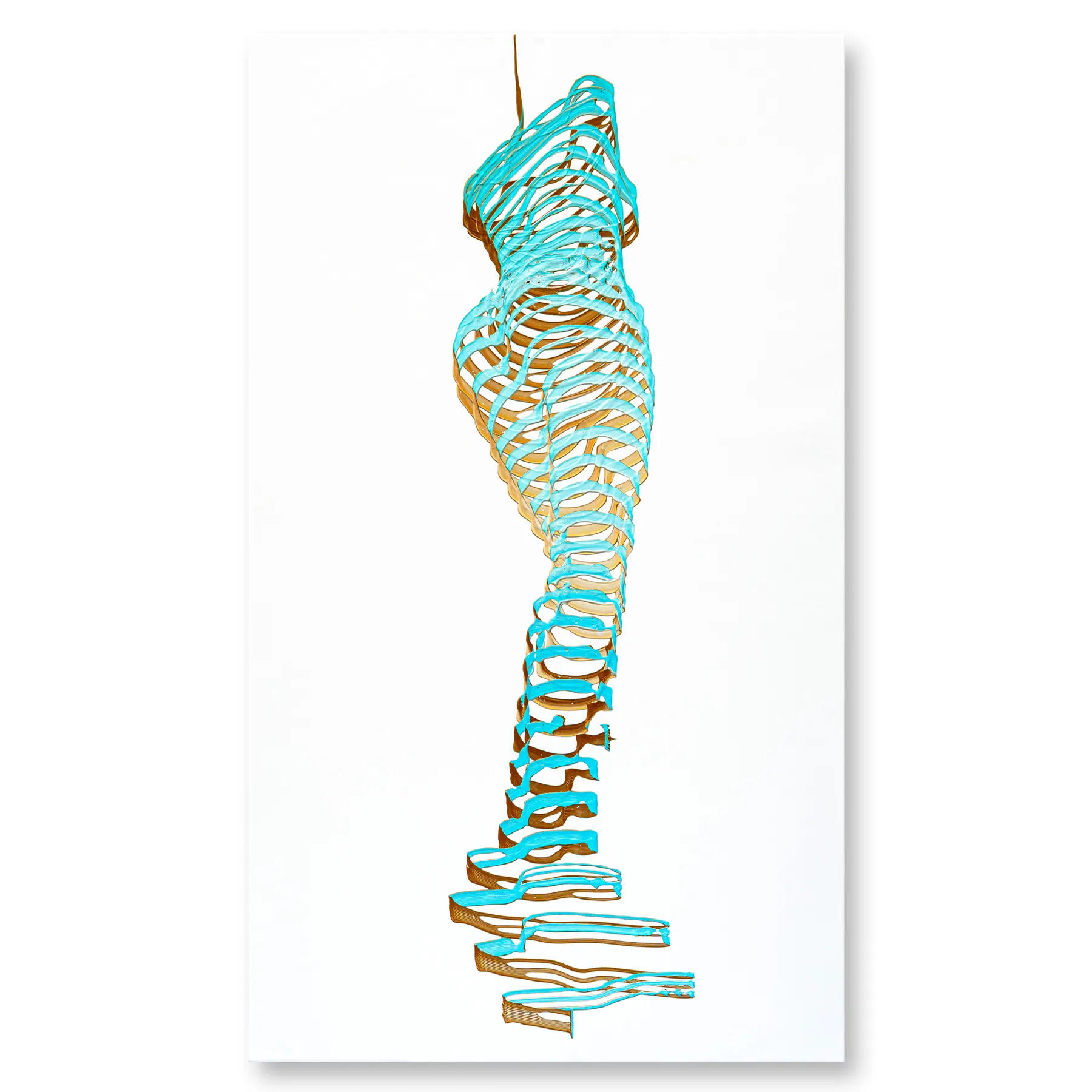
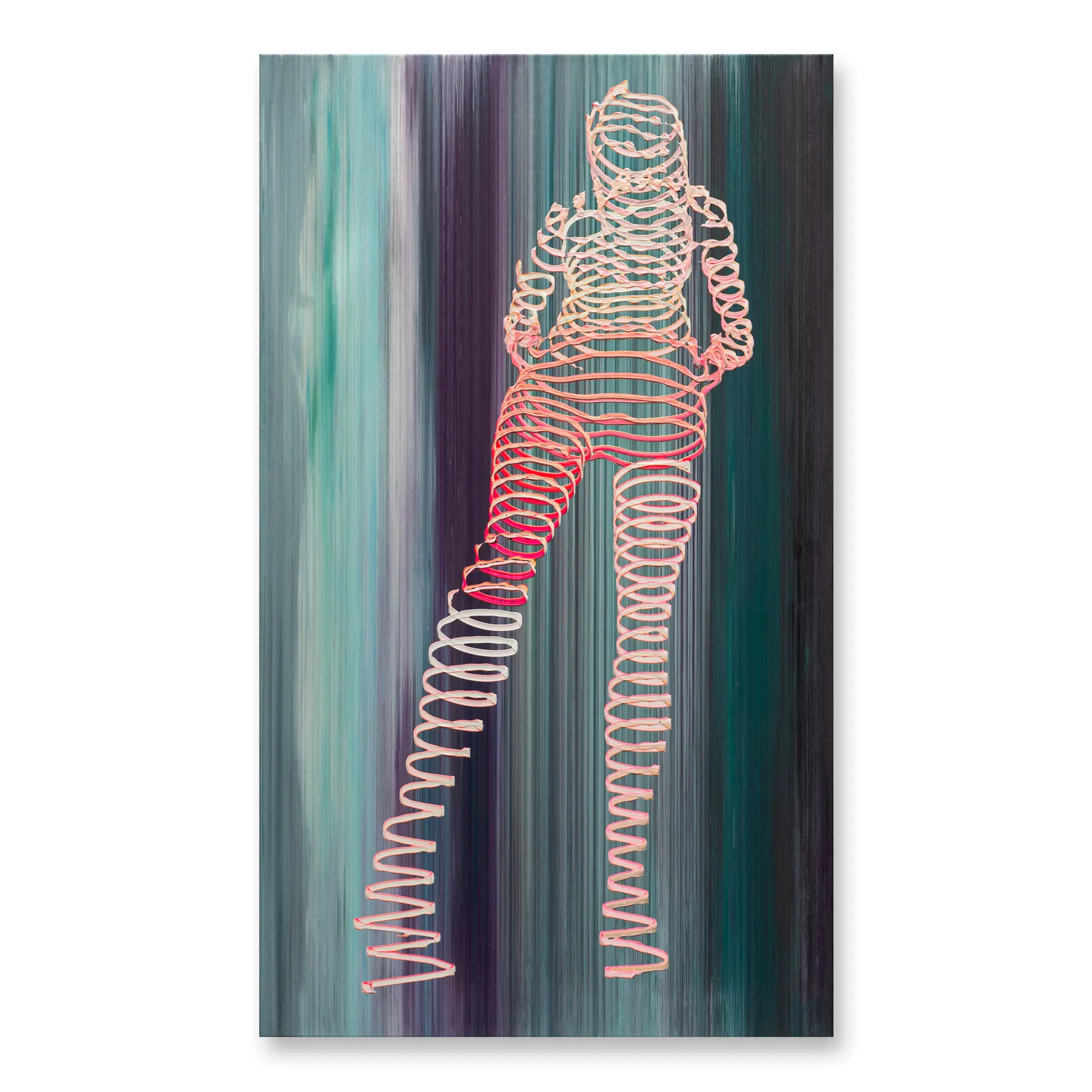
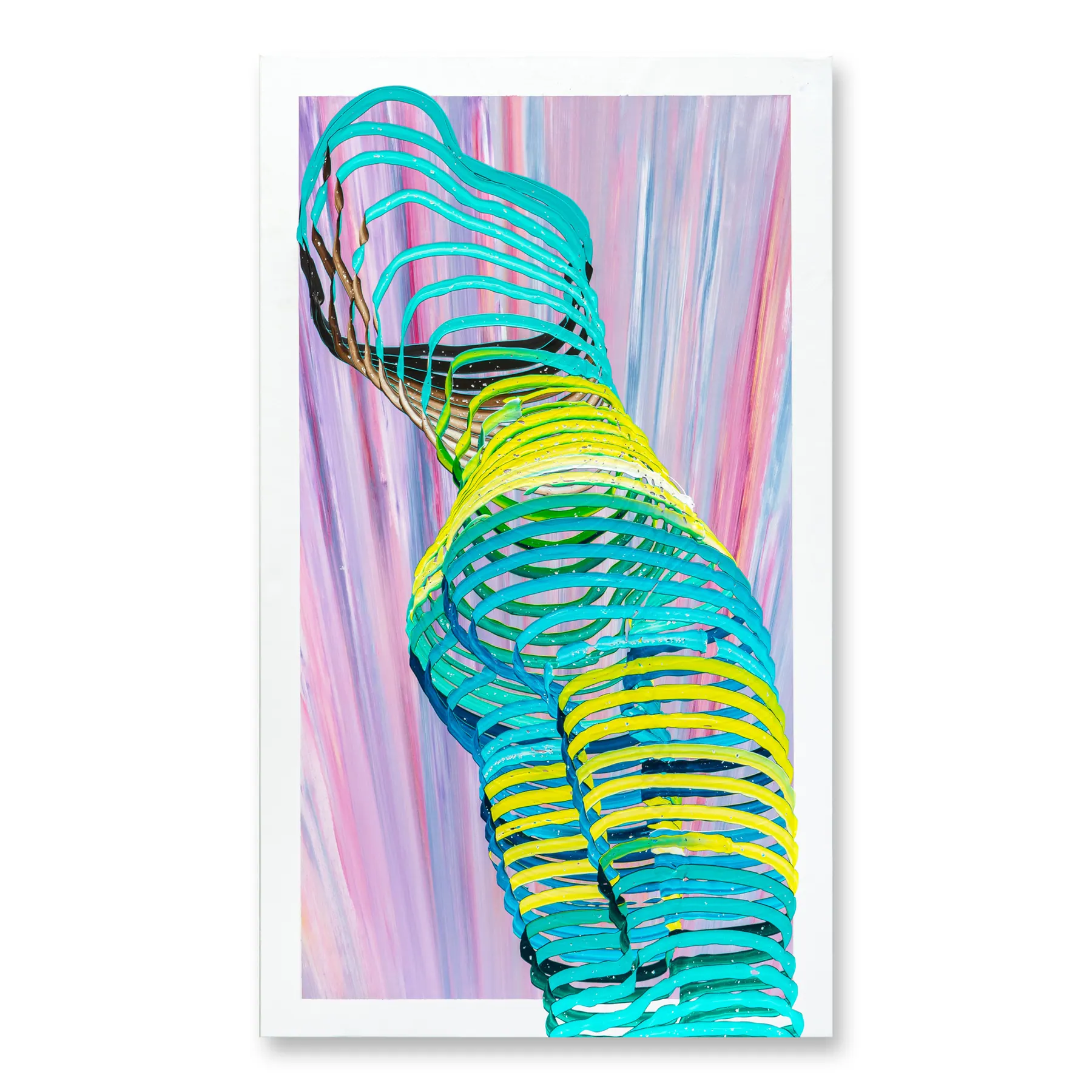
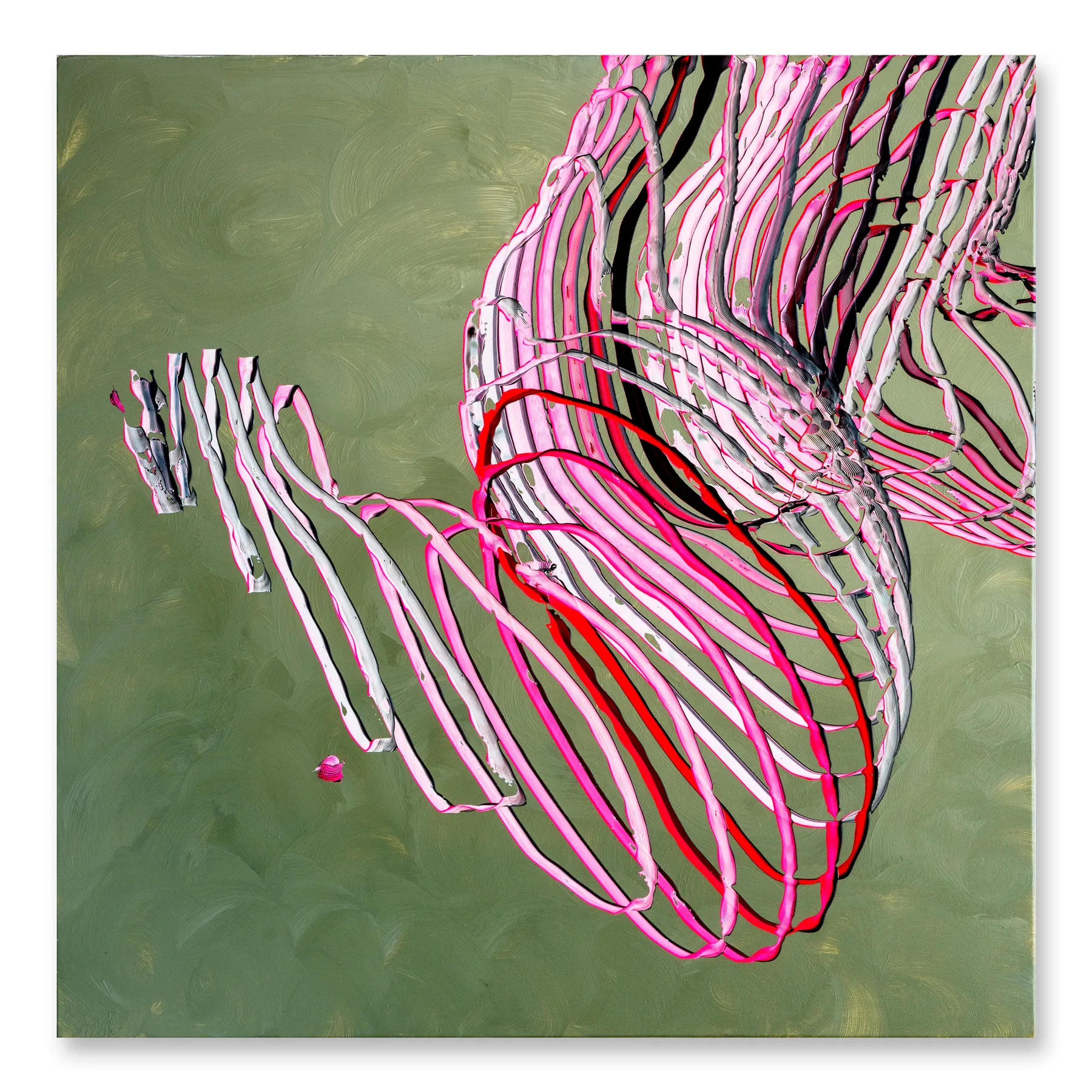
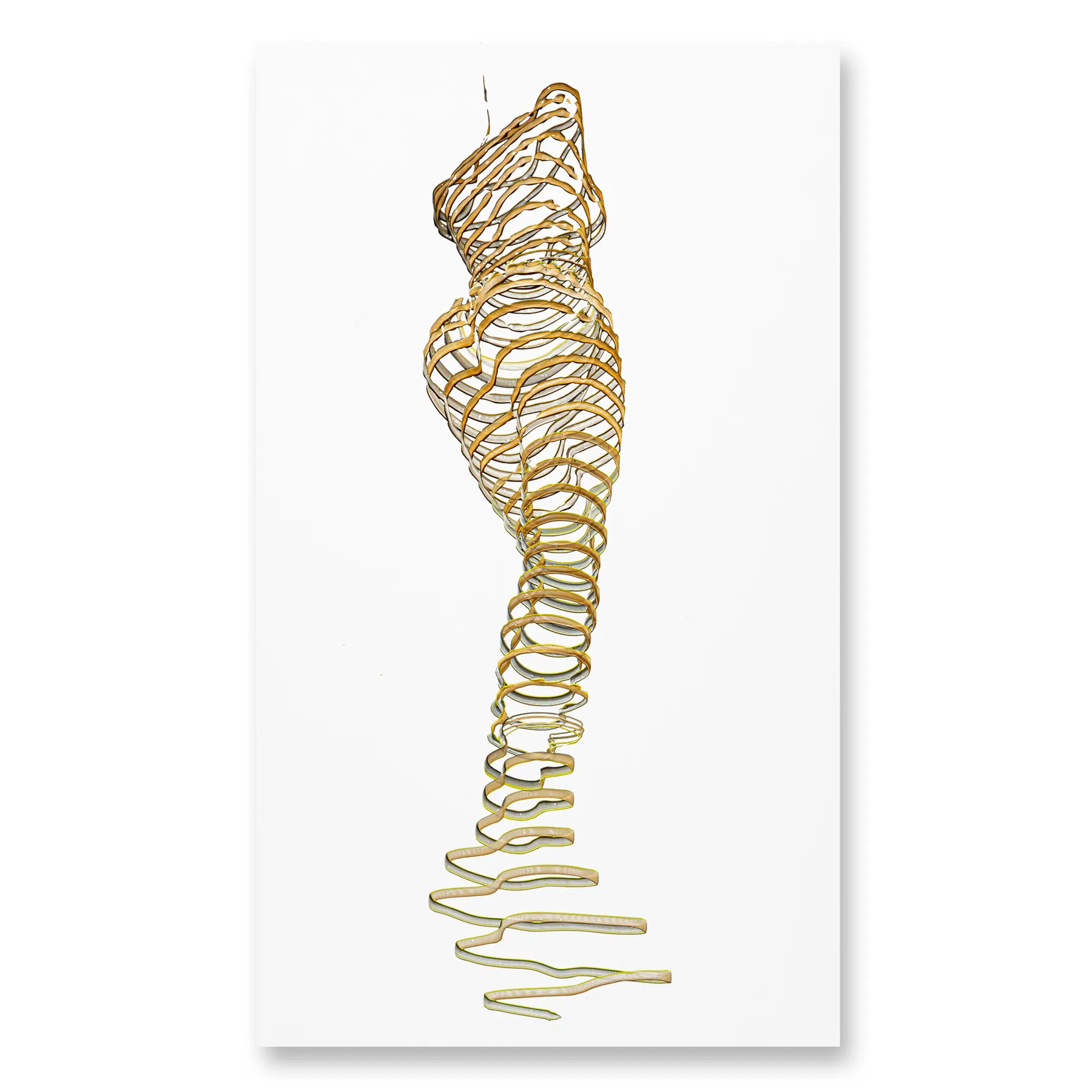
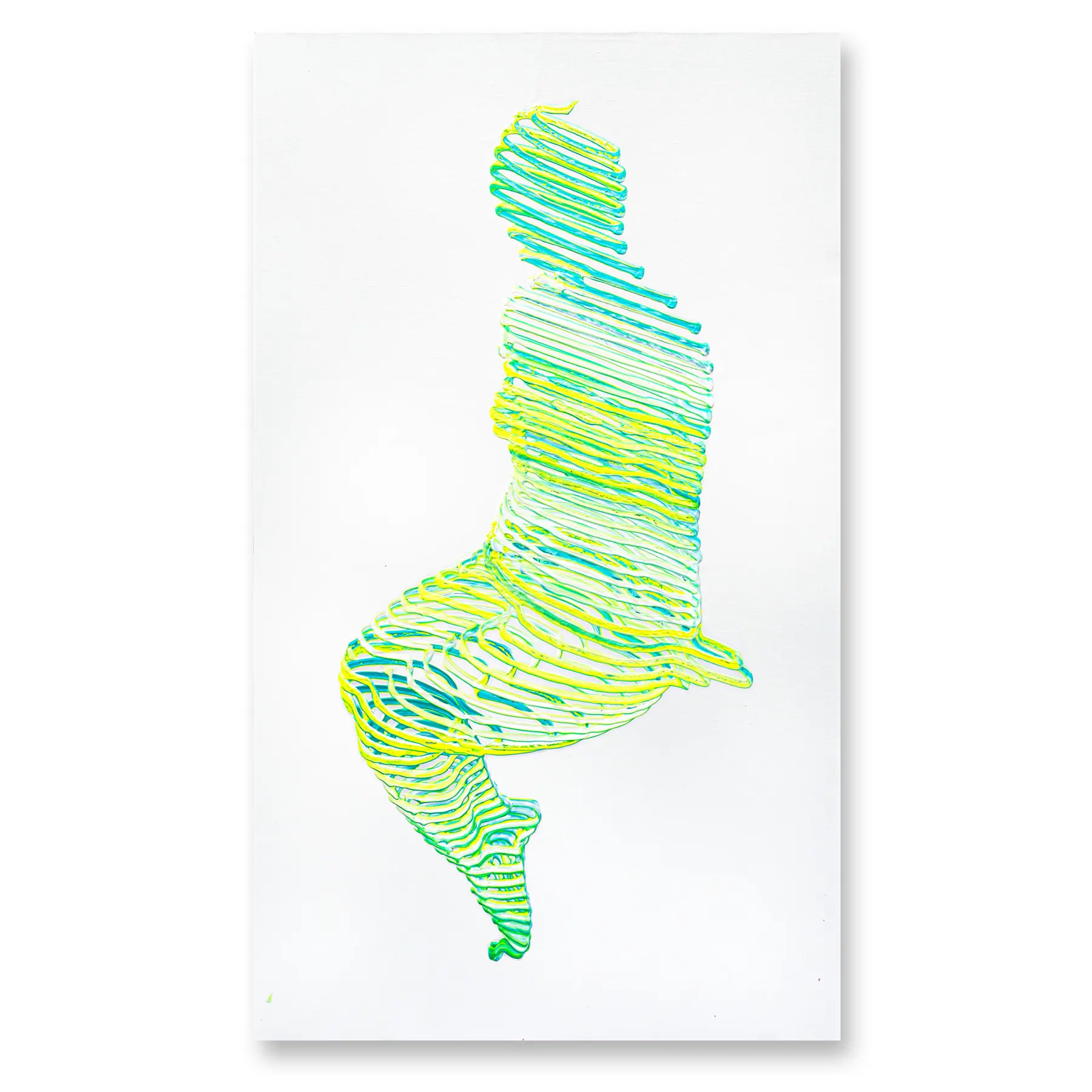
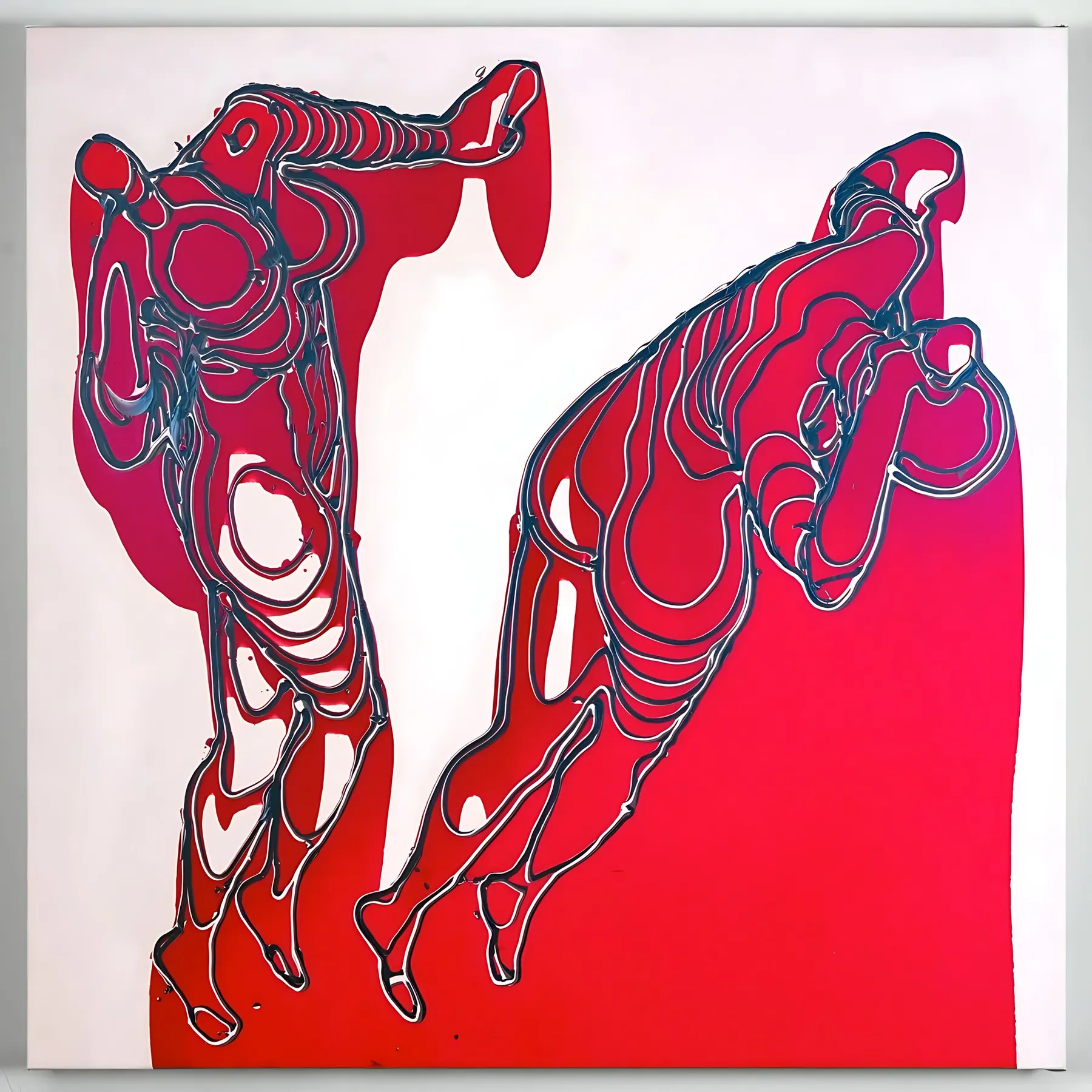
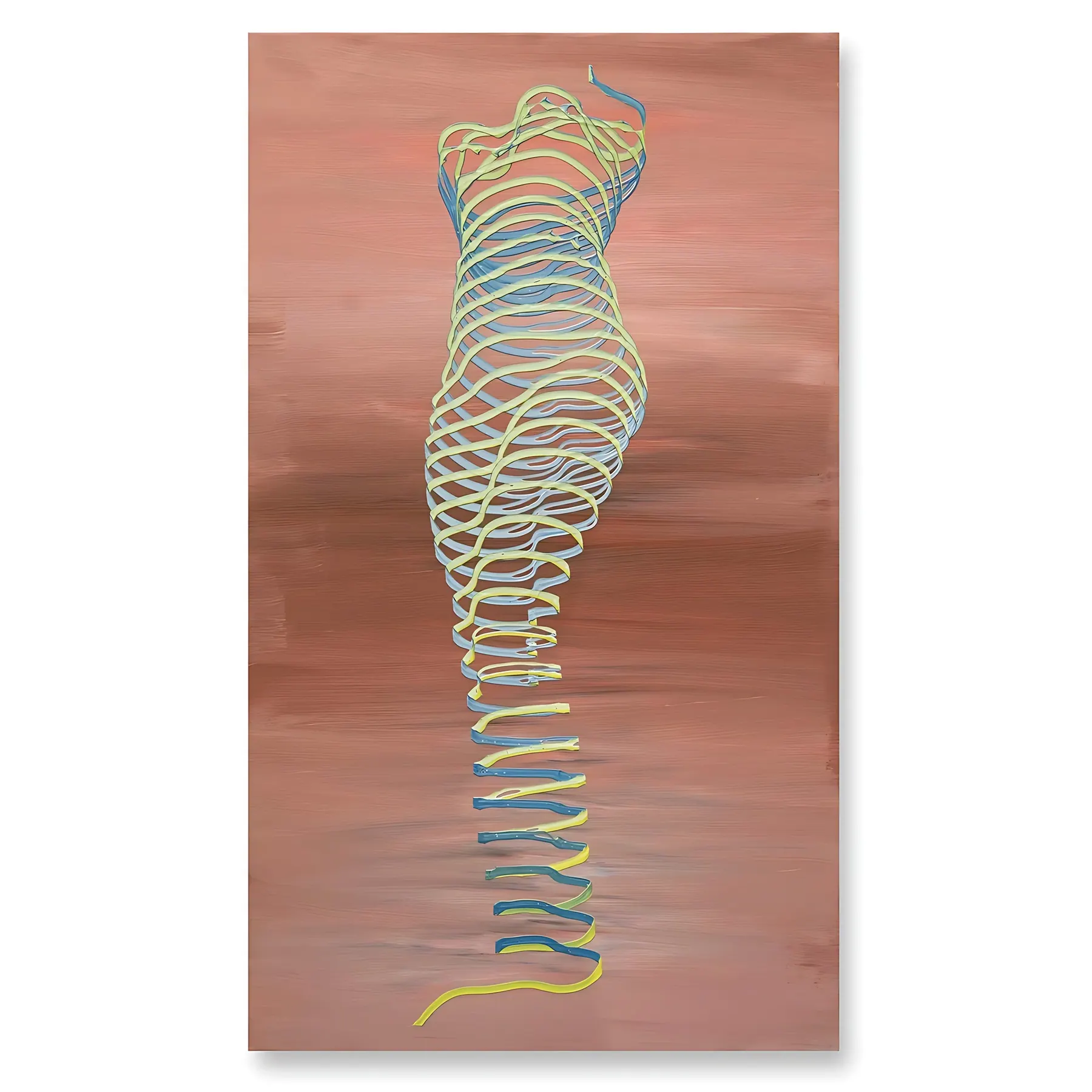
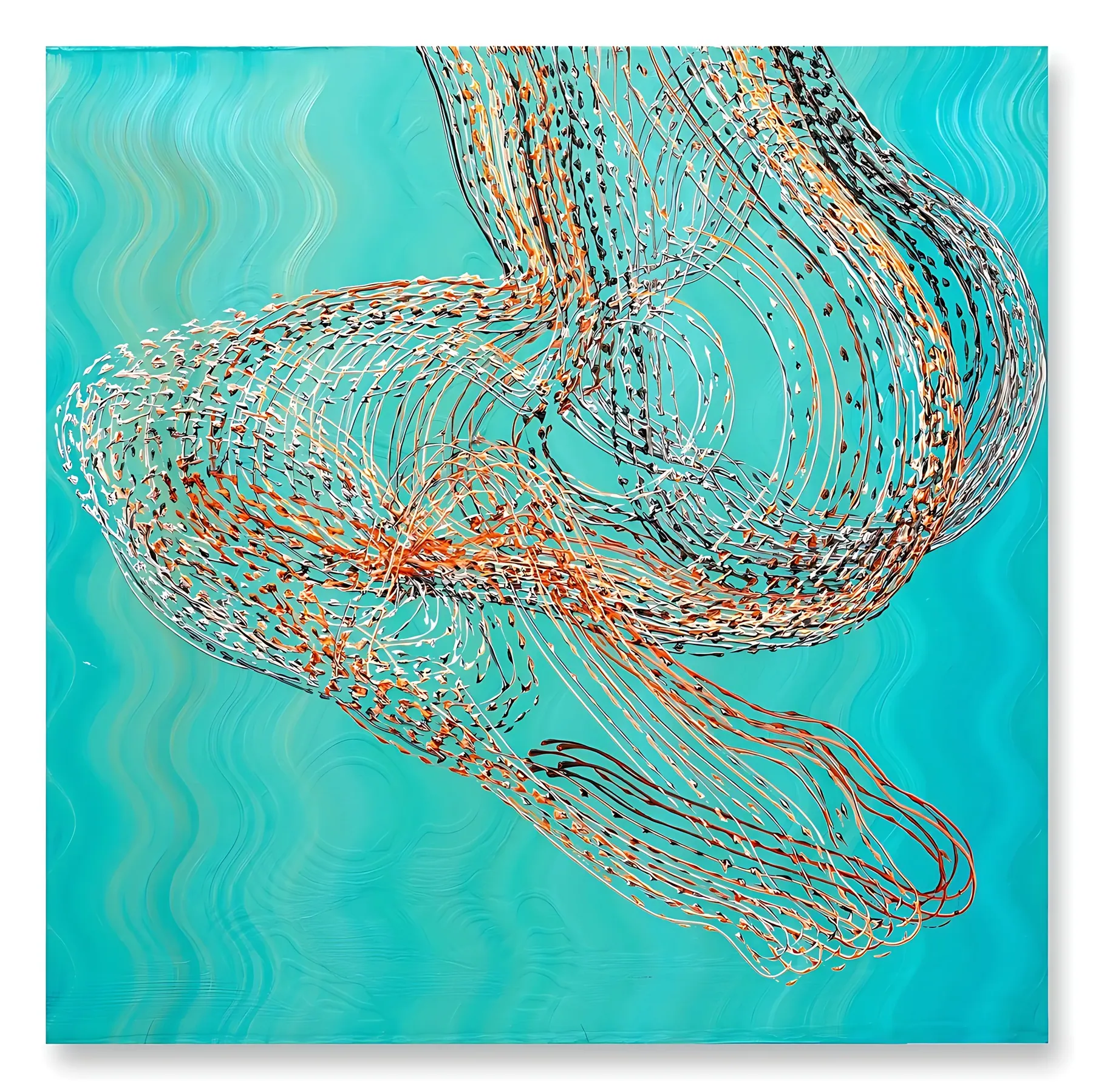
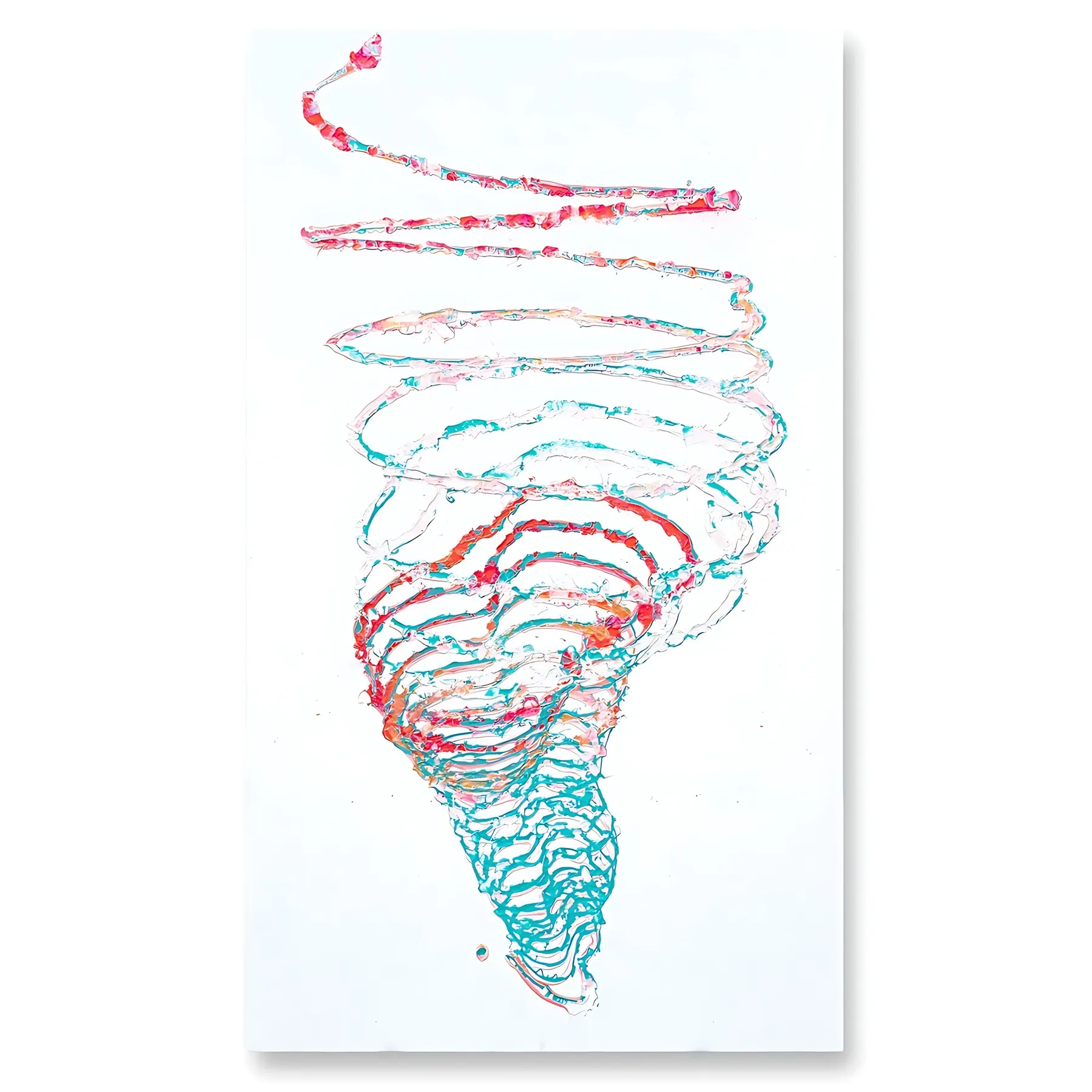
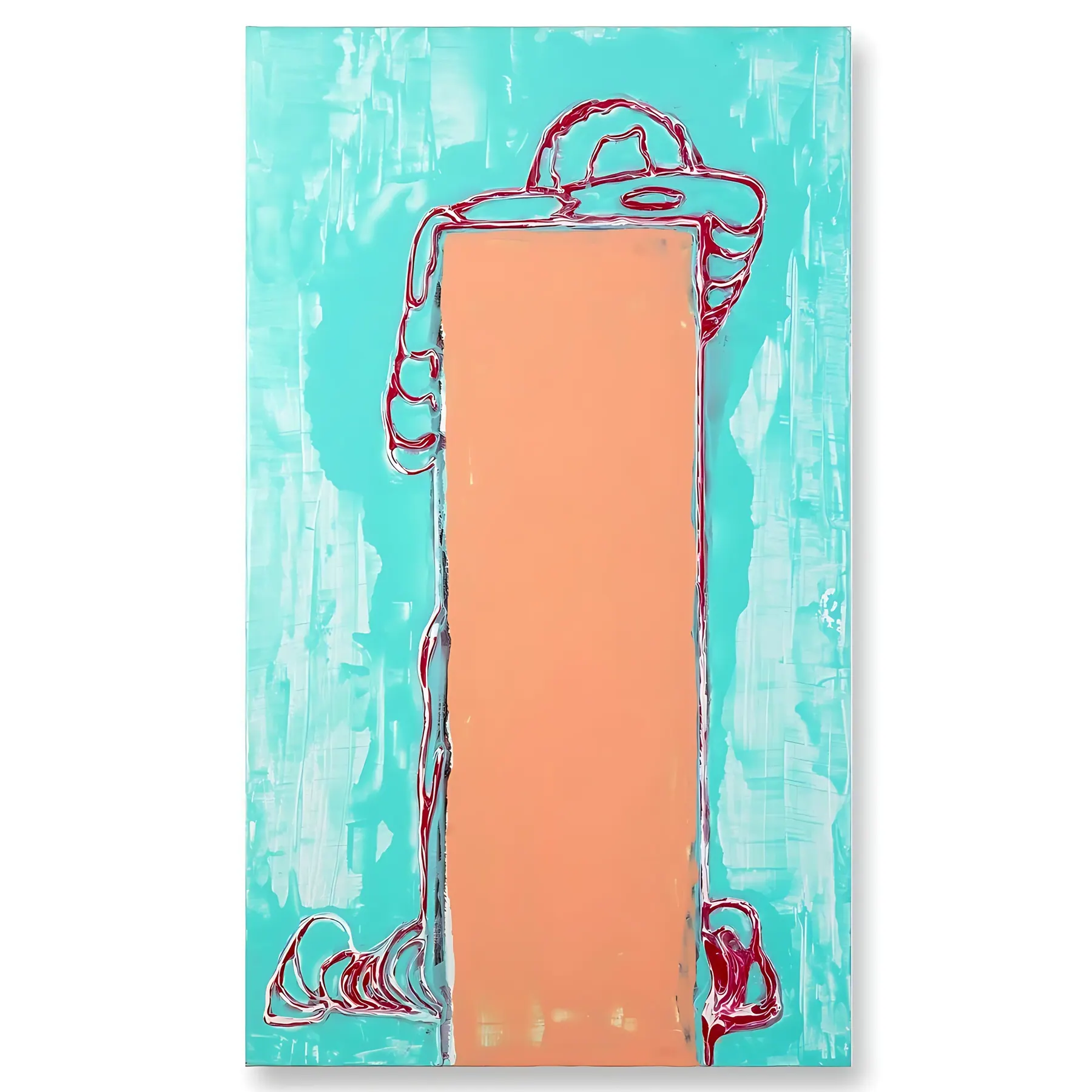
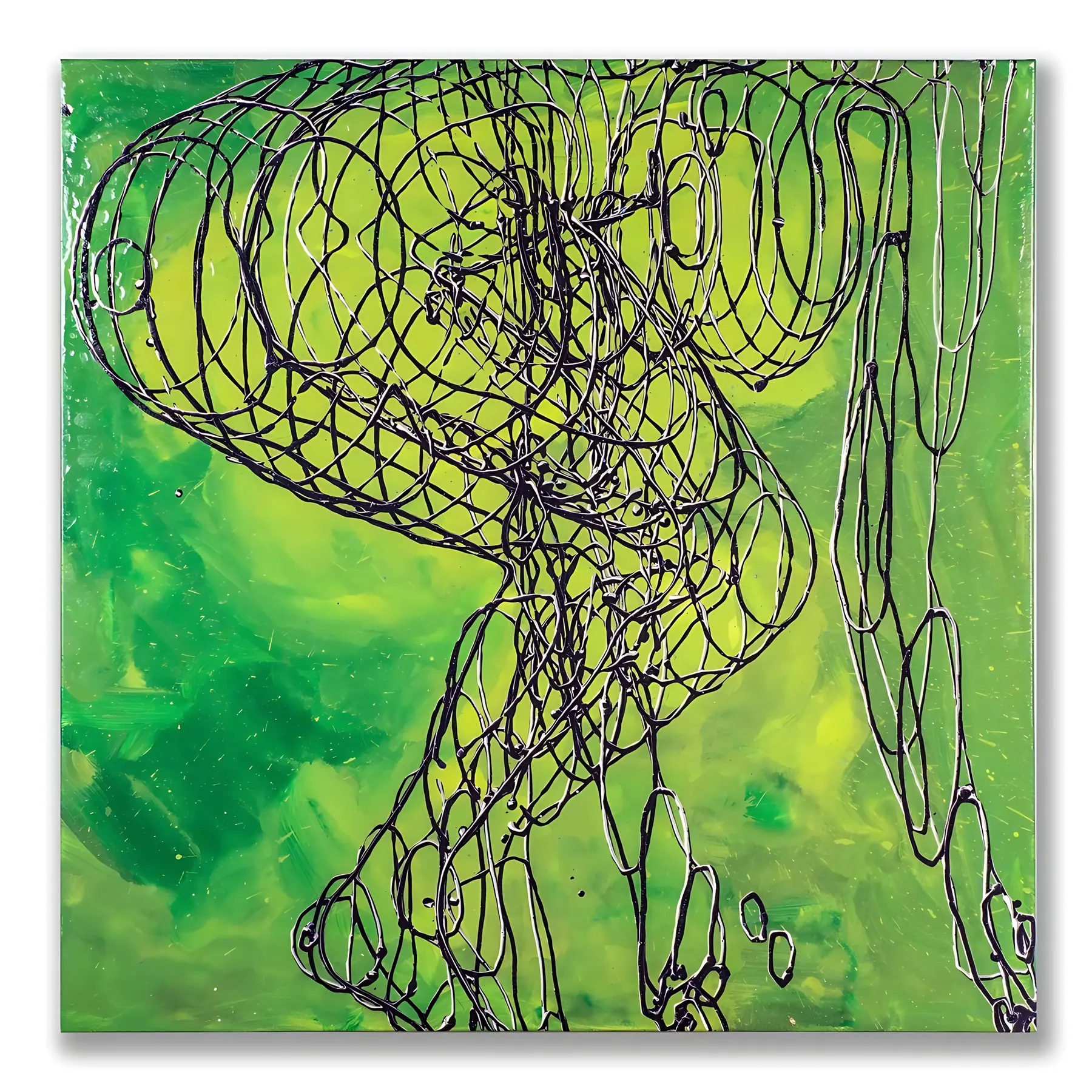
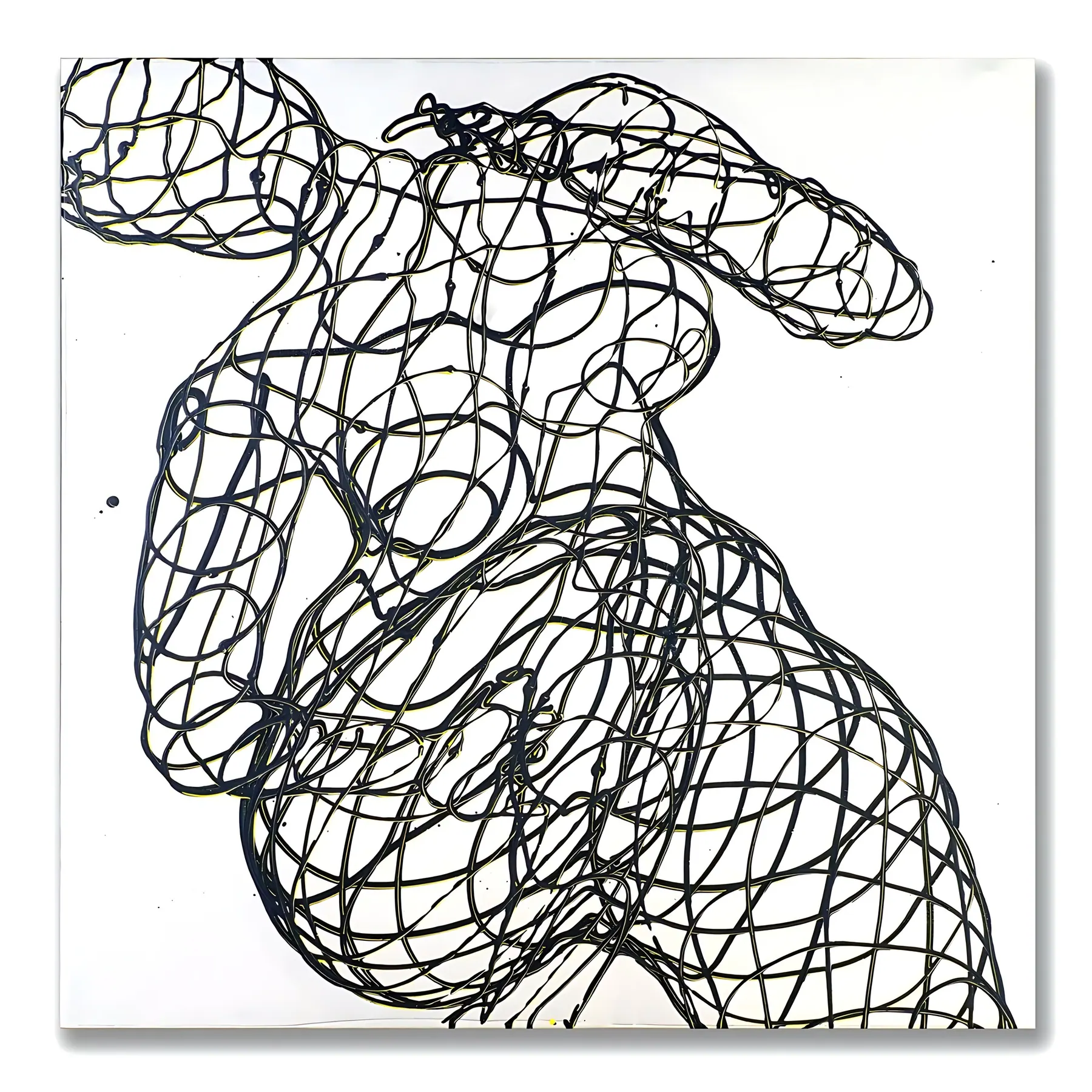
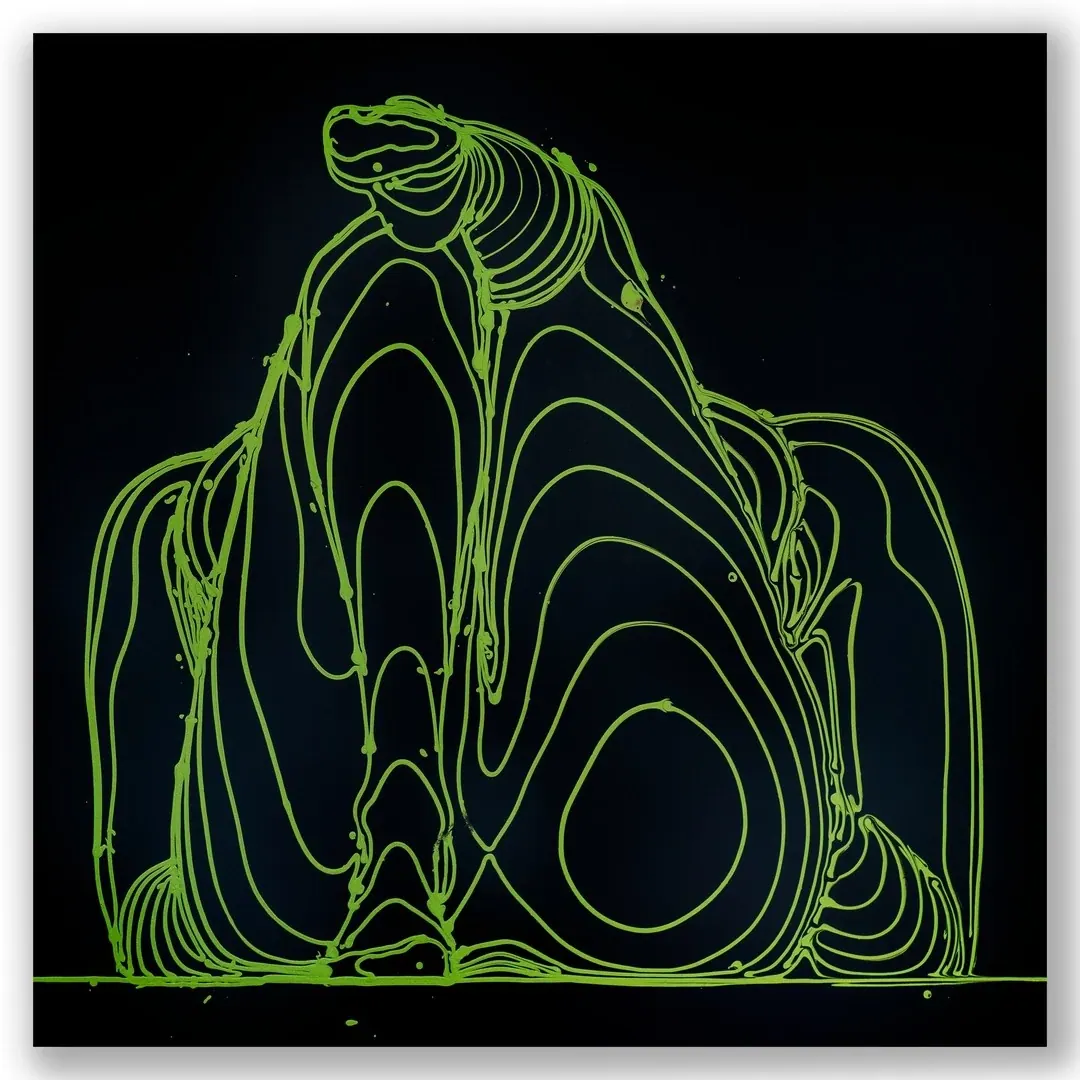
These Paintings are the manifestation of a collaborated work pioneered by artist Milan Sipek. His partner in this endeavor is none other than virtual reality and the machine that puts the vision into reality. Each piece is but a captured moment in an ever-expanding process, where the mind of the man can better influence the metal instruments that dance to each instruction. A ball captured in painting, each step composed in tandem, its context gently phrased in text to leave space for its performance.
To achieve these results, Sipek combines various techniques, both digital and analog, in a thorough and rigorous process. He begins by designing in VR, and then uses a mechanical hand to guide the instruments that bring his vision to life. Each painting is carefully planned, with colors, patterns, and scale being considered before the process begins.
The process starts with creating a 3D model of a figure using VR glasses and software, which is then exported and edited through various desktop software before being converted into G-code to guide the movements of the CNC machine. The machine is customized with 3D printed attachments to achieve different effects on the canvas, and the process also includes preparing and loading the acrylic paint, creating a background, and filming the process.
Sipek considers the most important steps to be those that take place on the computer, where he makes decisions about the composition, perspective, and pattern density of the designs. The entire process from beginning to end takes approximately three weeks, and Sipek finds inspiration from a range of sources including his own experiences.
He works with human figures, as the natural curves of the body translate well into the 3D work that he does, and he is open to exploring other subjects.
The wall
In the studio
Questions people ask
What is the name of the plastic tip or nozzle you use to deposit paint?
Milan has designed the plastic tip or nozzle himself and prints them out using a resin 3D printer. He has created dozens of variations while experimenting with his painting process. The nozzle does not have an official name.
Are you open to commissions?
Yes, Milan is open to commissions. He works digitally, so he can consult with clients during the process before the painting begins.
What machine are you using to paint?
Milan uses a CNC machine, often used for wood cutting and carving, to deposit the paint in intricate ribbons. He has developed a paint extruder and nozzles that allow him to do so. He also has created other attachments for the machine, including scrapers, brushes, and burners, to add texture and depth to the paintings.
How did you develop the idea for using a CNC machine for painting?
While working as an architect and product designer in China, Milan had the opportunity to work with large-scale computer-aided machining. Upon his return to Europe, he used these skills to build his own machine and was free to explore its potential. At first, he attached markers to the machine, but over time, his ideas and the machine evolved into what it is today.
How long does it take for the paintings to dry completely?
The paintings take anywhere from a week to three weeks to dry completely, depending on the ambient temperature in the studio and the amount of paint deposited on the canvas. When dry, the acrylic paint turns into a rubbery material that retains some elasticity, and the texture and relief in the paint ribbons remains.
How do you create the figures for your paintings?
Milan creates the figures for his paintings using VR software. He uses a variety of programs to sculpt 3D models in a VR environment, which are then exported to desktop CAD software. The lines traced in the CAD software become the path for the CNC machine.
Where can I find your large paintings?
Click this and fill out the form to receive a quote.